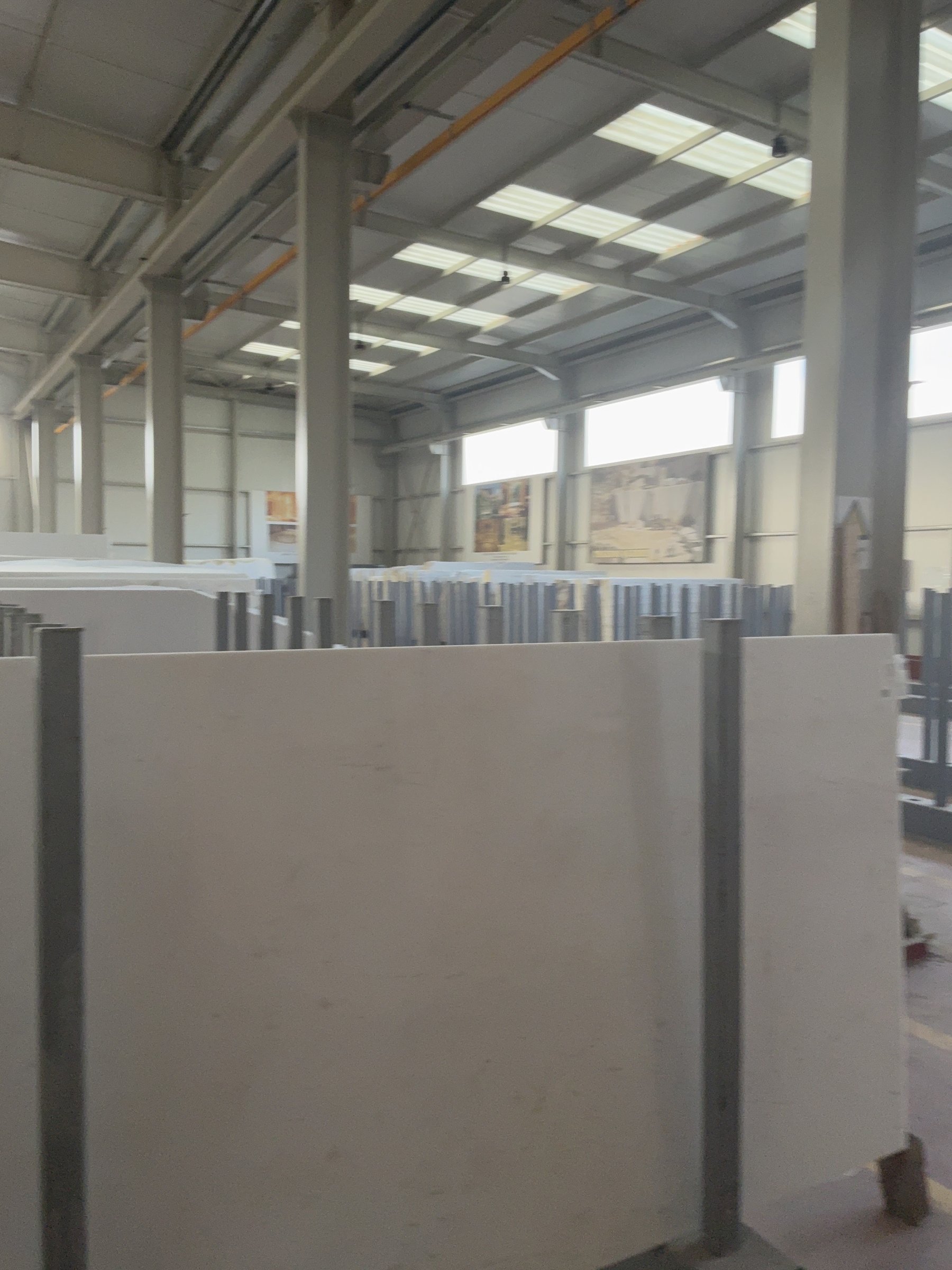
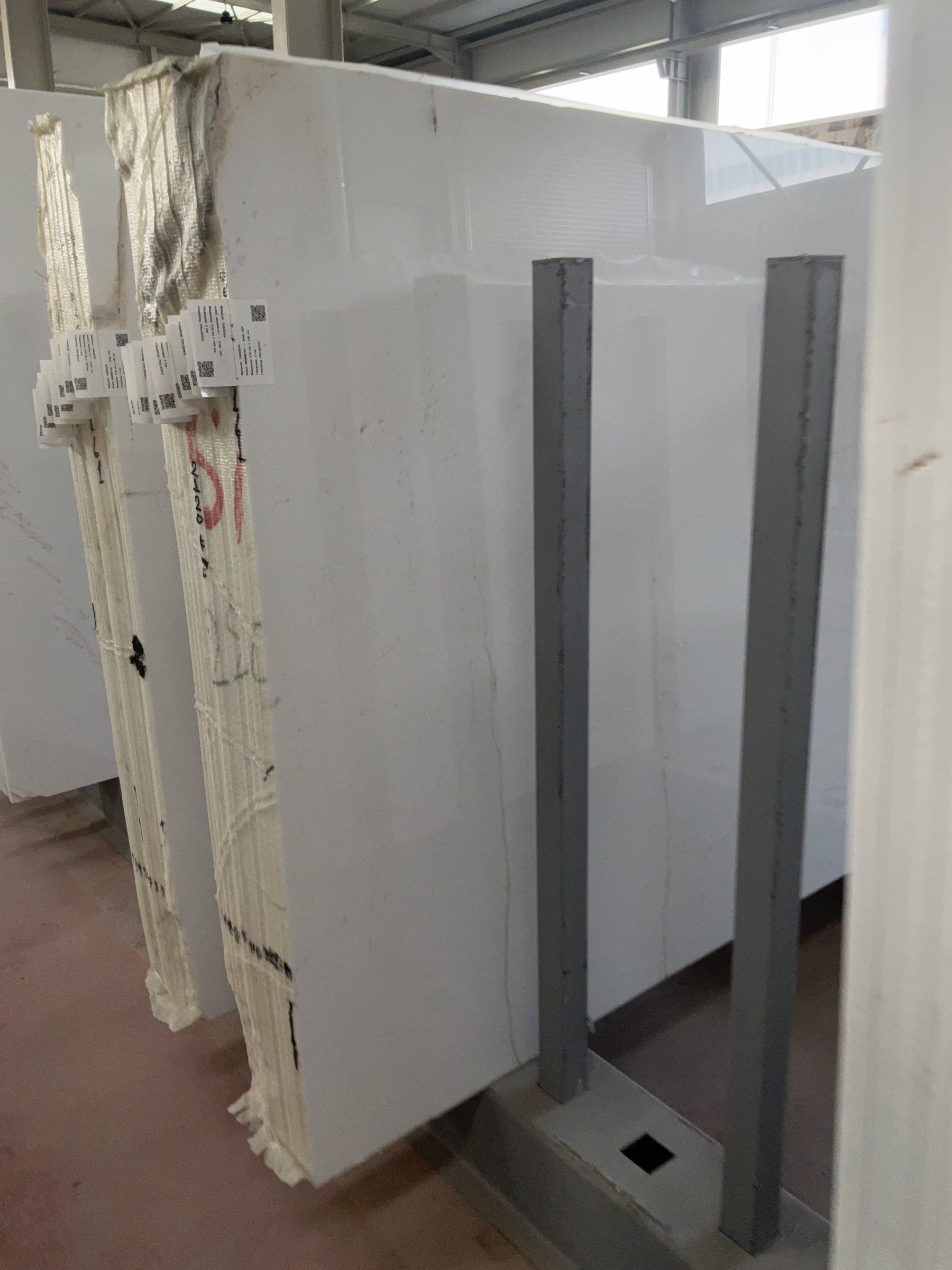
Natural stone is never perfect, and some variation is part of its charm. Real marble defects, however, can weaken a slab, spoil a design or create extra cost on site. A careful look at each slab before you pay, or before it is cut, will catch most problems. This guide explains what to look for and which features are normal.
Natural character vs genuine defects
Before rejecting a slab, separate character from faults. Veins, clouds, colour drifts, small crystalline spots and minor natural pits are typical of marble and often what makes it attractive. A defect is something that affects strength, consistency with the rest of your order, or the quality of processing.
The most common marble defects to check
Cracks and open fissures
Look for lines that cross veins rather than follow them, or that you can feel with a fingernail. Run a little water over suspicious areas; open cracks often show as a darker line as water seeps in. Through-cracks that appear on both faces are a serious concern for slabs that will span openings or be cut into long pieces.
Excessive resin or filler
Most processors fill natural pits and micro-fissures with resin, and some slabs have a mesh backing for support. This is normal practice. Problems arise when large areas are filled, when filler colour does not match, or when resin is cloudy, yellowed or poorly polished. Tilt the slab against the light: filled areas often reflect differently.
Colour and pattern inconsistency
Slabs from different blocks can vary noticeably. Lay them out side by side, ideally in daylight, and compare them with the approved sample. Check the block and sequence numbers on each slab tag to keep a run together.
Thickness variation and warping
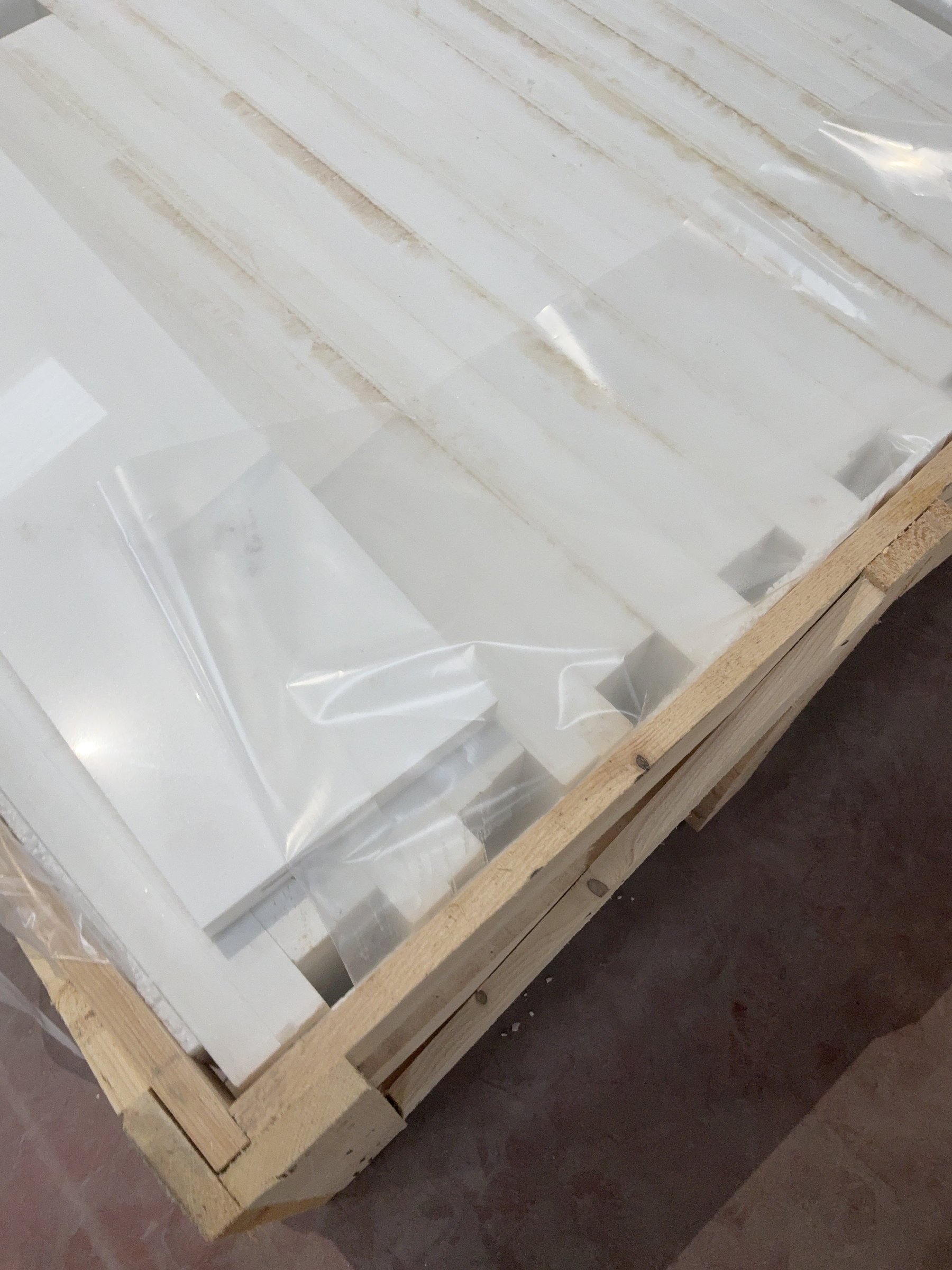
Measure thickness at several points around the edges. Uneven slabs cause lippage on floors and alignment problems on cladding. Place a straightedge across the face to check for bowing.
Poor surface finishing
On polished stone, look for dull patches, swirl marks, chatter marks from the machine and uneven gloss. On honed stone, look for patchy sheen. These are processing faults rather than natural features.
Chips, broken corners and handling damage
Edges and corners take the most knocks during loading and transit. Small chips may be cut away during fabrication, but they reduce usable size.
A simple inspection routine
- Inspect in good natural light, from a distance first, then close up.
- Check both faces and all four edges.
- Wet the surface to reveal fissures and true colour.
- Measure size and thickness against the packing list.
- Photograph each slab with its tag visible.
- Agree in writing which slabs are accepted, set aside or rejected.
Reducing risk on imported marble
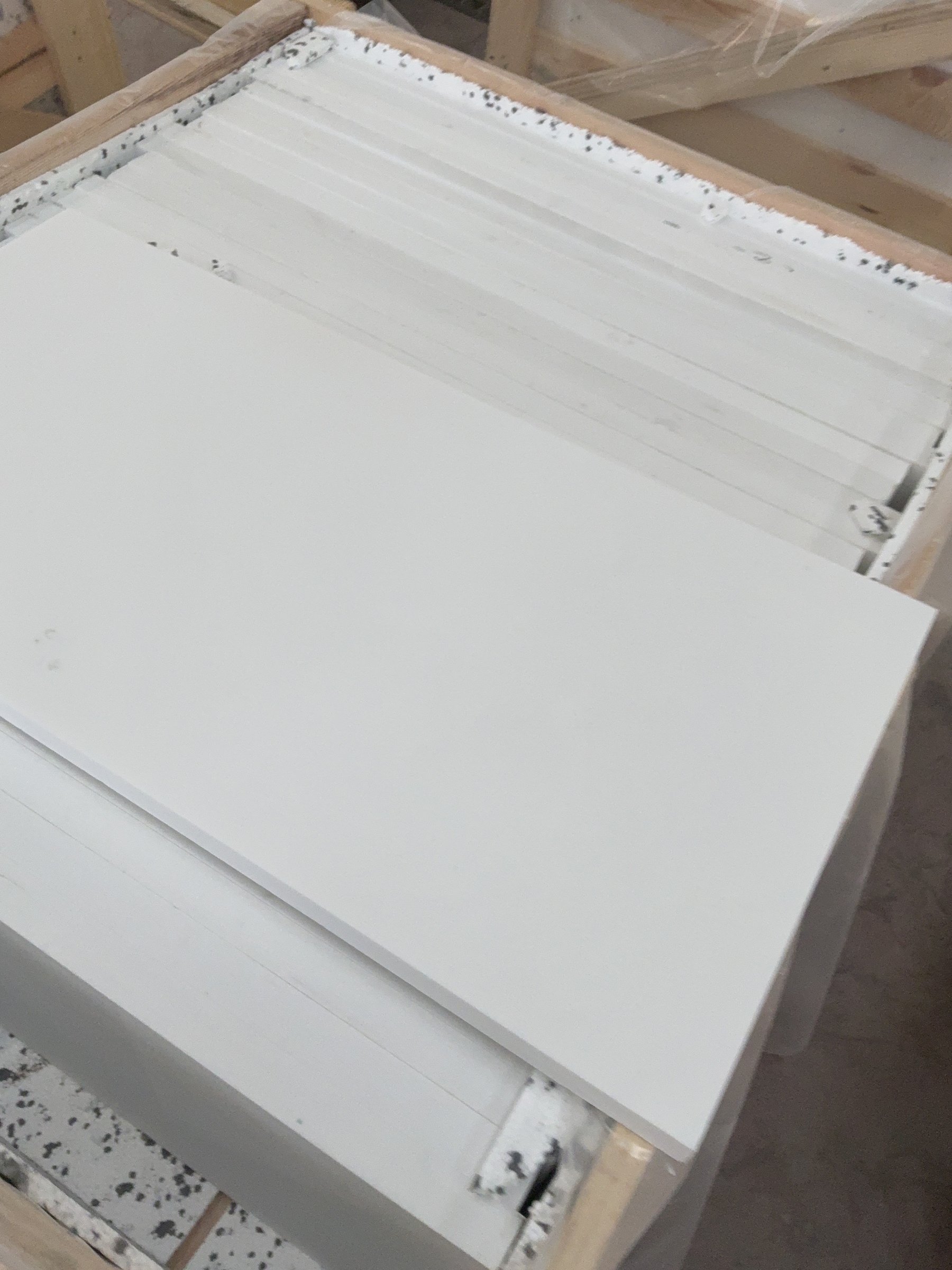
For imported material, good packing and handling are as important as good stone. Well-built crates, proper strapping and careful unloading reduce breakage. Our marble transport service and warehouse support are built around protecting stone between port and site. If a crate arrives damaged, photograph it before unpacking and inform your supplier and insurer promptly.
What to do when you find a problem
Finding a defect does not always mean rejecting a slab. A fabricator may be able to cut around a crack, place a filled area under an appliance or use a slightly off-shade slab in a less visible room. Discuss options before deciding. Where a slab is genuinely unsuitable, record the issue with clear photographs, the slab tag and crate number, and raise it with your supplier promptly and in writing. Clear records make any discussion faster and fairer for everyone involved, and they help you plan replacement quantities without delaying the rest of the installation.
We can support slab selection and receiving checks for your project. Explore marble slabs or contact us at info@prosvogue.com.
Frequently asked questions
Is resin filling in marble a defect?
Not by itself. Filling natural pits is standard practice. It becomes a concern when fills are large, badly coloured or poorly finished.
How can I tell a vein from a crack?
Veins are part of the stone and feel smooth. Cracks often cross veins, can be felt with a fingernail and darken when wetted.
Should I inspect slabs before or after fabrication?
Before. Once slabs are cut to size, rejecting them is much harder and more costly for everyone.
Key topics: marble defects · slab inspection · marble cracks · resin filling · stone quality · buying marble