Islamabad: Most monuments close at dusk in every sense, the form flattens, the detail disappears, the grounds empty. Yadgar-e-Fatah was planned on the opposite assumption: that the hours after sunset are when a memorial in a hot capital is most likely to be used.
Lighting the memorial
The lighting scheme is accordingly large. Some 2,871 architectural fixtures are distributed across the memorial, its steps, walls, streets, landscape and ground surfaces, post-top lights, step lights, street lights, wall grazers, landscape and spike lights, bollards, flag lights and inground fittings, each doing a different job.
That variety matters because the site is not a single building. The scheme has to describe the monument while making pedestrian routes, planting beds and ceremonial ground legible and safe to walk after dark. The intention is layered light bright where people move, restrained elsewhere; rather than flooding the site to a uniform level, which would erase the very shadows the architecture depends on.
How the marble holds light
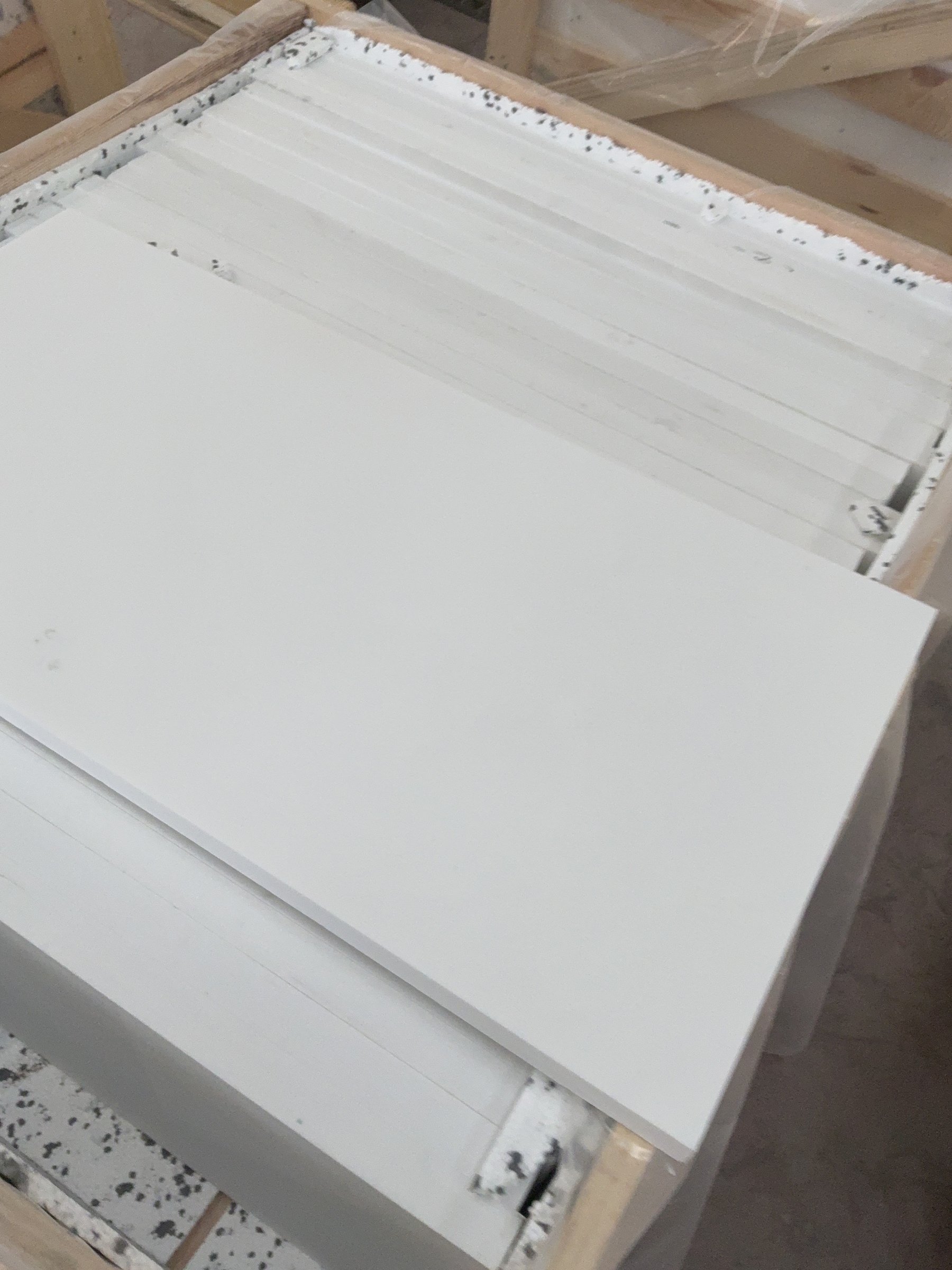
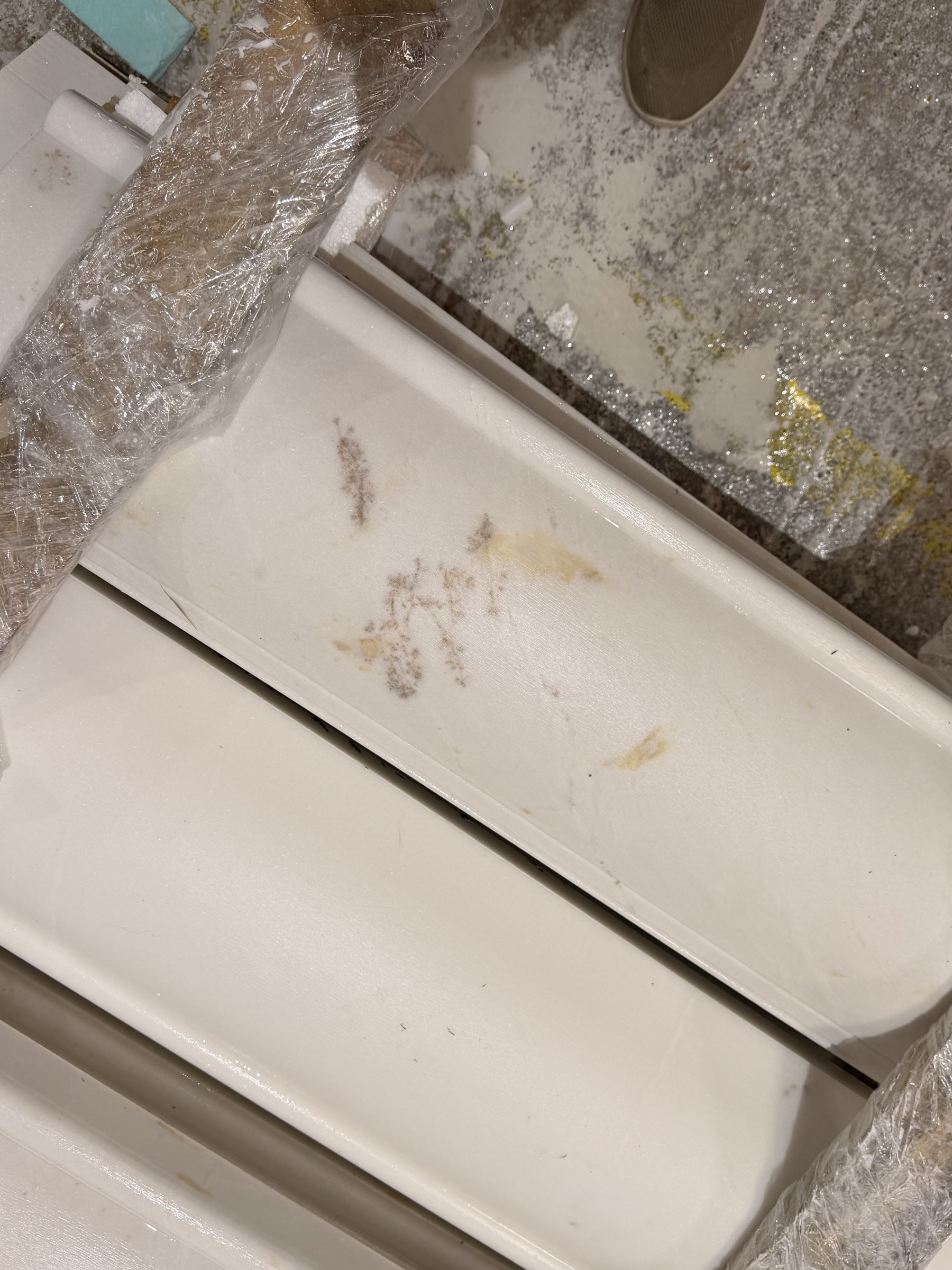
The white marble repays the effort. Its dense, low-porosity surface responds strongly to grazing light, and under strong or backlit conditions the stone can show a faint translucency and appear to hold a glow of its own. On a monument whose whiteness is meant to stand for light and purity, that is not merely a technical bonus.
Planting and water
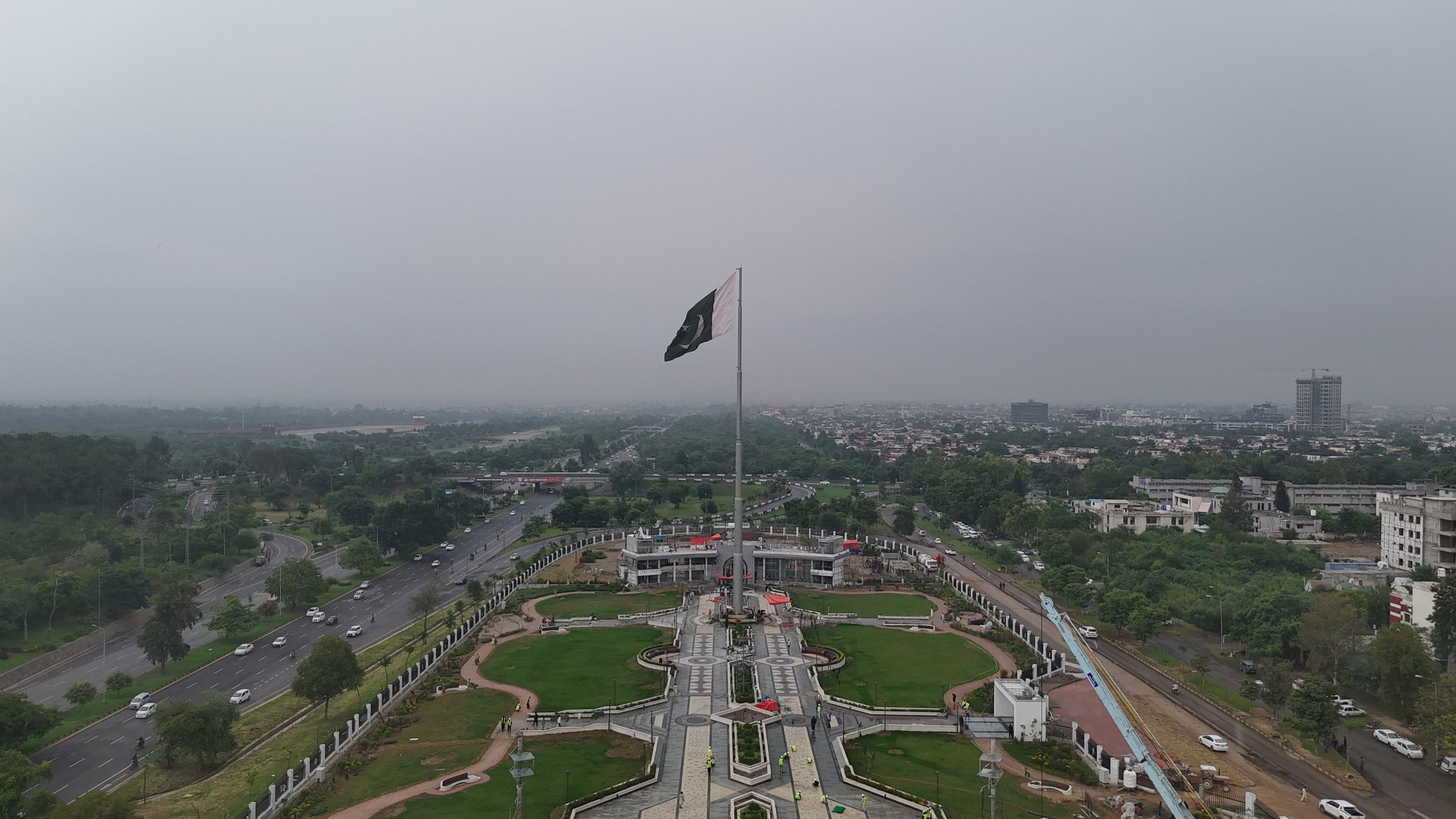
Planting supplies the counterweight. More than 925 trees and ornamental plants have been established across the grounds, with roughly 270,000 square feet of lawn. Dry fountains add movement to the ceremonial precinct, and the national flag flies from a tall flagpole that acts as a second focal point, visible well beyond the boundary, a fitting emphasis at a site built around the dignity of that flag.
The landscape has its own water strategy. A dedicated irrigation network serves the lawns and planting, drawing in part on a 25,000-gallon rainwater-harvesting tank that captures runoff for reuse, a practical provision in a city where summer irrigation demand is high.
The projection system
The most theatrical element is the projection system. Four projectors, each rated at 30,000 lumens, are permanently installed and supported by a dedicated sound system, allowing the broad marble elevation to be used as a projection surface.
This changes what the building is for at night. By day, visitors experience stone, geometry and landscape. After dark, the same façade can carry imagery, sound and the story it has to tell is already written.
During Operation Bunyan-un-Marsoos, the enthusiasm and spirit of the Pakistani people were remarkable; with every defensive action they encouraged their armed forces and celebrated the country’s defensive strength. The coordination between the Army, Navy, Air Force and cyber intelligence gave a decisive advantage against the enemy. At dawn, young soldiers raised the Takbeer and kept their promise to the martyrs. Elsewhere, a son of the soil stood shoulder to shoulder with a fellow soldier and became, for a moment, a focal point of the world’s attention.
Those are the episodes a projected presentation can carry in a way that carved stone cannot: movement, voice and sequence. The armed forces answered an attack launched under the cover of darkness with a historic reply, and the memorial is capable of retelling that night on the façade itself, after dark, in front of an audience seated on the terrace.
Programming matters
It also raises the stakes for programming. A permanent projection installation is only as good as the material shown on it, and a façade of this prominence will quickly reveal the difference between a considered presentation and a slideshow. The technology has been provided; the content will decide whether people come back.
The memorial was designed by Architects Arif Masood and Mahnoor Qureshi, with Colonel Abuzar as Project Director, and constructed by the Frontier Works Organisation (FWO).
By day the site speaks through stone and planting. After sunset it speaks through light, water and projection and it is that second language, addressed to the generation now arriving at the gates, that is likely to keep the memorial in regular public use.
Prosvogue supplied and installed the Thassos White marble cladding at Yadgar-e-Fatah. Read how we imported 40,000 sq ft from Greece, explore our marble range or contact us at info@prosvogue.com.
Photographs: Prosvogue project archive.