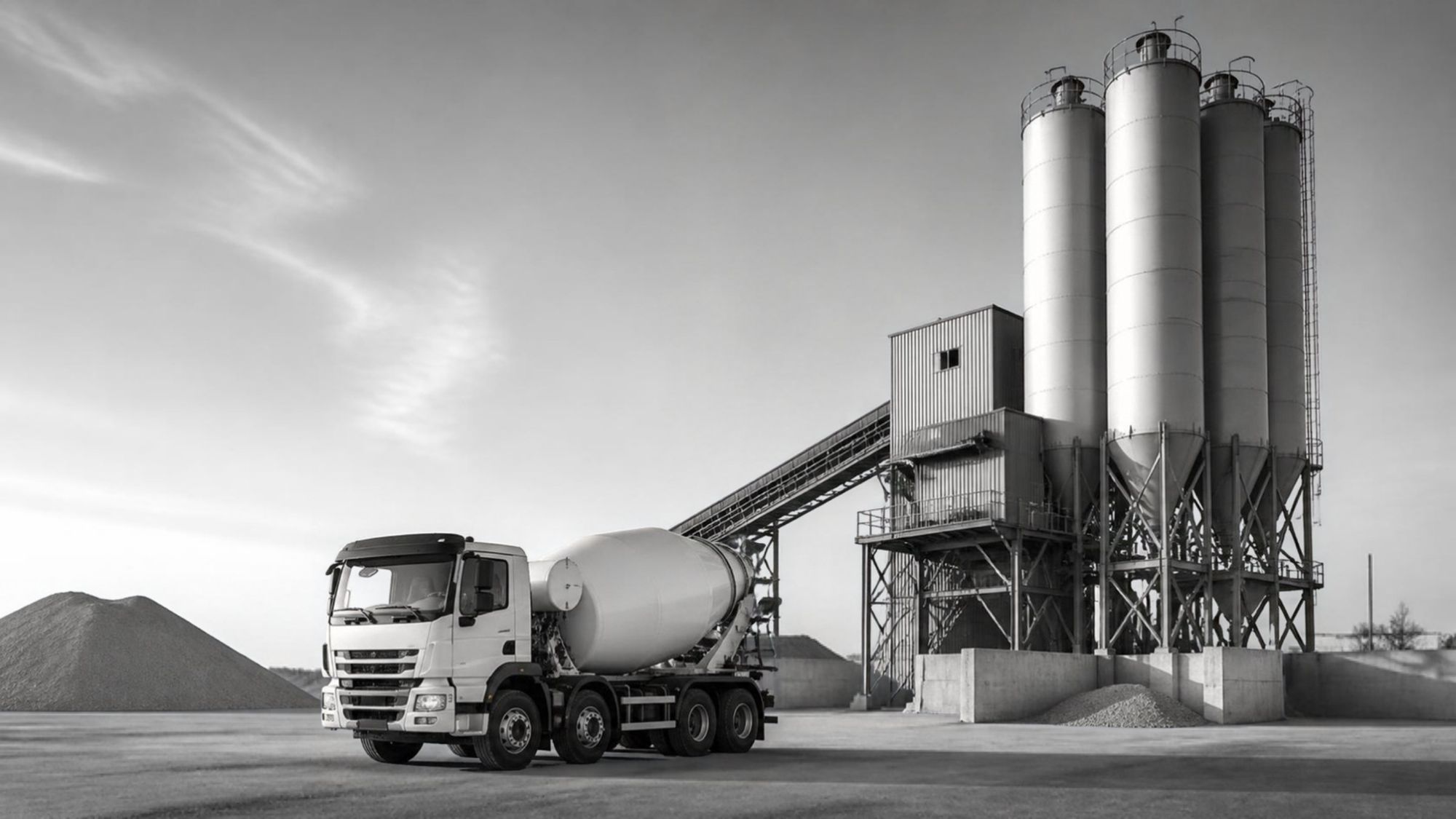
Most large structures in Pakistan, from plazas to bridges, are built with concrete produced at a concrete batching plant rather than mixed by hand on site. Understanding how ready-mix is made helps contractors and owners order the right concrete, plan pours and check quality.
What a concrete batching plant does
Concrete is a simple material in principle: cement and water form a paste that binds sand and stone together as it hardens. In practice, small changes in proportions, moisture or mixing time can make a large difference to strength and durability. A batching plant measures each ingredient accurately and combines them into a consistent mix. The word “batch” refers to one measured load. Consistency is the main advantage: every batch should match the approved mix design, which is hard to achieve with manual mixing on a busy site. Plants also produce concrete much faster than site mixing, which matters for large slabs, raft foundations and columns that must be poured continuously to avoid cold joints.
Main parts of a batching plant
- Aggregate bins: separate compartments for sand and different sizes of crushed stone.
- Cement silos: sealed vertical silos fed by bulk tankers, with screw conveyors to the weigh hopper.
- Weigh hoppers: load cells weigh aggregates, cement and water to the mix design.
- Admixture dosing: pumps add measured quantities of chemicals such as plasticisers or retarders.
- Mixer: a twin-shaft or pan mixer in central-mix plants.
- Control cabin: software that stores mix designs and records every batch.

Step by step: how ready-mix is made
- Mix design: an engineer specifies strength, workability and durability; a laboratory sets proportions.
- Weighing: the plant weighs each aggregate, cement and water, correcting for moisture in the sand.
- Mixing: in a wet (central-mix) plant, materials are mixed in the plant mixer. In a dry plant, they are loaded into the truck drum, which does the mixing.
- Loading: concrete is discharged into transit mixers that keep the drum turning.
- Delivery: trucks travel to site, where concrete is placed directly or through concrete pumps.
- Records: a batch ticket shows the mix, quantity and time of loading.
Quality control at the plant and on site
Good plants control quality at every stage. Aggregates are tested for grading and cleanliness, cement is stored dry, and scales are calibrated regularly. On site, common checks include the slump test for workability, concrete temperature in hot weather, and casting cubes or cylinders for strength testing at set ages.
Time matters too. Concrete starts to stiffen after mixing, so travel distance, traffic and waiting time on site all affect the result. Adding extra water on site to make concrete flow more easily weakens it and should not be allowed without the engineer’s approval.
Summer adds another challenge in Pakistan. High air temperatures speed up setting, so plants may use chilled water, shaded aggregate stockpiles, retarding admixtures or early-morning and night pours to keep concrete workable. Agreeing these measures before the pour avoids rejected loads and weak sections.
Choosing between site plants and ready-mix supply
Smaller jobs in cities often buy from a commercial ready-mix supplier. Large or remote projects, such as highways, dams or big building complexes, frequently set up their own batching plant on site to control supply and timing. Points to weigh up include:
- Total concrete volume and pour sizes.
- Distance and traffic between supplier and site.
- Availability of space, water and power for an on-site plant.
- Need for special mixes and tight quality control.
- Mobile versus stationary plant, depending on how often the project moves.
Explore our batching plants and wider plants and equipment services. contact us or email info@prosvogue.com.
Frequently asked questions
What is the difference between wet and dry batching plants?
A wet plant mixes concrete in a central mixer before loading the truck. A dry plant weighs materials and loads them into a transit mixer, which does the mixing on the way to site.
Why is adding water on site a problem?
Extra water increases the water-cement ratio, which reduces strength and durability. Any adjustment should follow the mix design and the engineer’s instructions, often using admixtures instead.
How long can ready-mix concrete wait before placing?
It depends on the mix, admixtures and temperature. In hot Pakistani summers concrete stiffens faster, so pours should be planned to place concrete promptly, following the supplier’s and engineer’s guidance.
Key topics: concrete batching plant · ready-mix concrete · aggregates · mix design · quality control · transit mixers