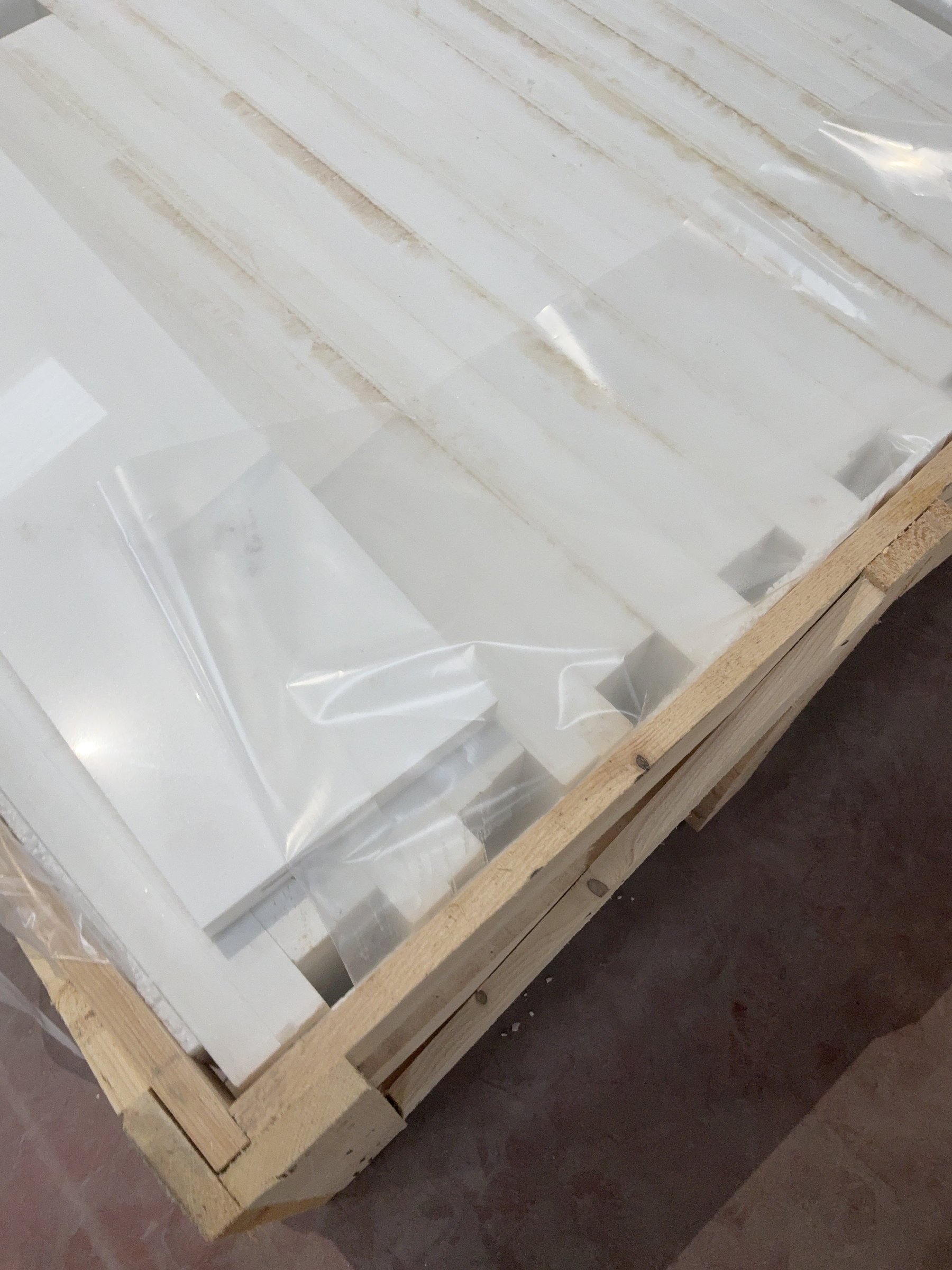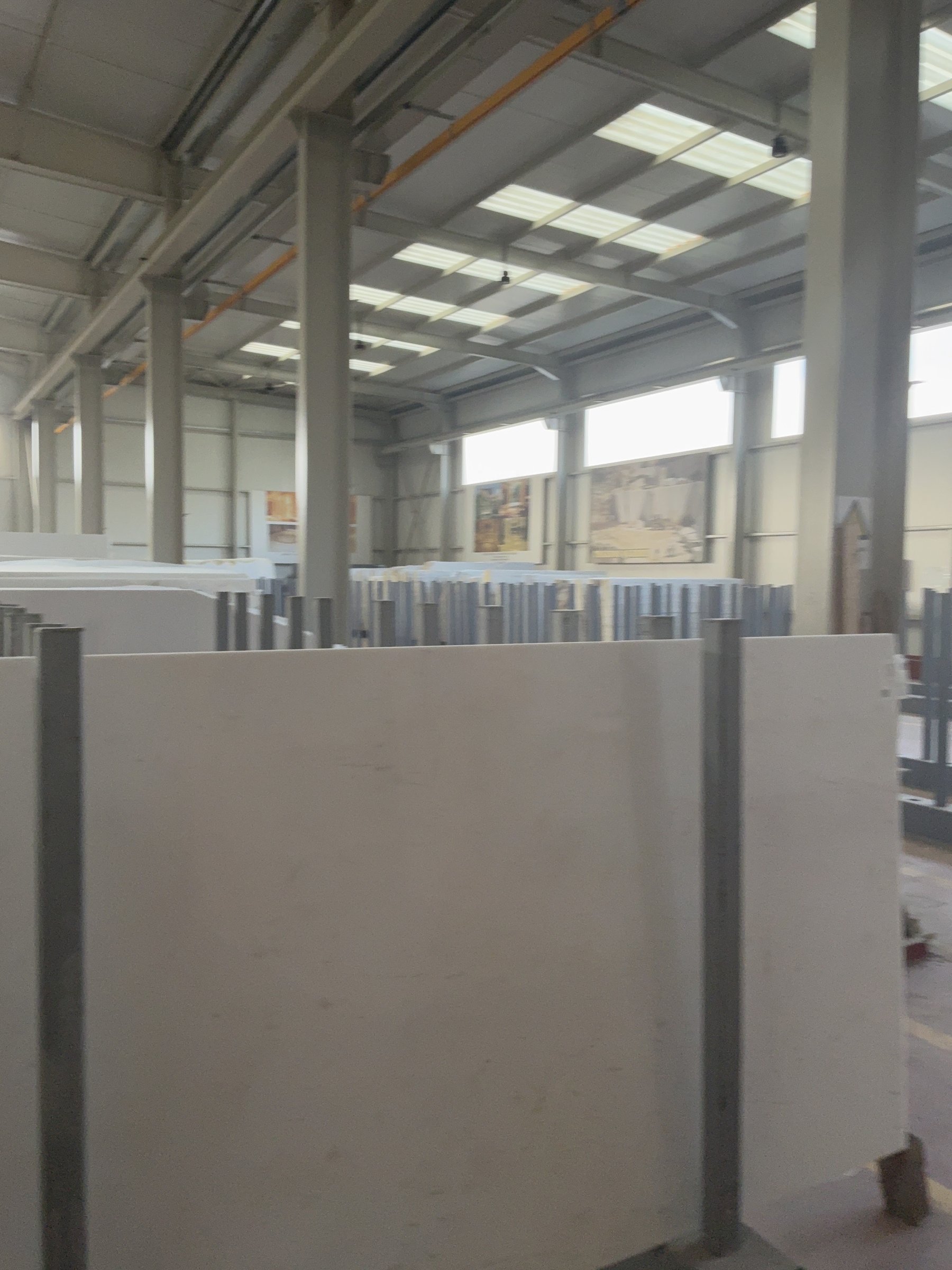
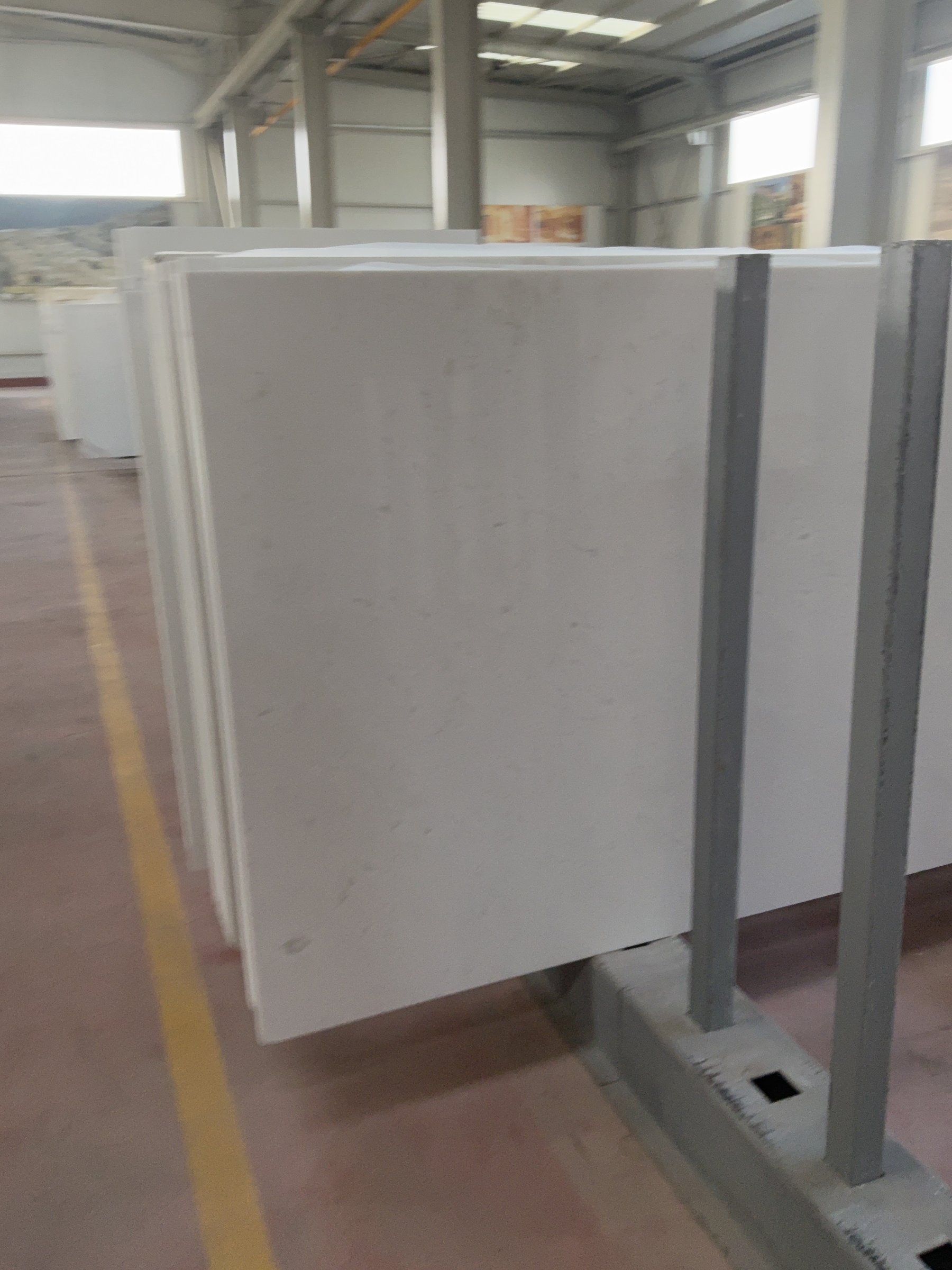
A marble slab tag is a small label with a lot of useful information. Whether it is a printed sticker, a stencilled marking or a barcode label, it links each slab back to the block it was cut from and records its size, thickness and finish. Knowing how to read one makes it far easier to select, match and track stone for your project.
Why slab tags matter
Marble is natural, so colour and veining vary from block to block, and even within one block. Slabs cut one after another from the same block look most alike, which is why tags record their sequence. For a kitchen, a bathroom or a large wall, choosing consecutive slabs from one block gives a consistent appearance and makes book-matching possible.
Common information on a marble slab tag
Formats differ between quarries, processors and exporters, but most tags include some or all of the following:
- Material name: the commercial name, for example Thassos White or Volakas.
- Block number: the quarry or processor’s reference for the original block.
- Slab or sequence number: the order in which the slab was cut, often written as a number out of the total, such as 12/40.
- Dimensions: length and height, usually in centimetres, sometimes with gross and net measurements.
- Thickness: commonly 2 cm or 3 cm for slabs.
- Area: square metres per slab, used for pricing and quantity checks.
- Finish: polished, honed, brushed, or other surface treatments.
- Grade or quality: some suppliers mark a commercial grade or selection.
- Bundle or crate number: links the slab to its shipping crate and packing list.
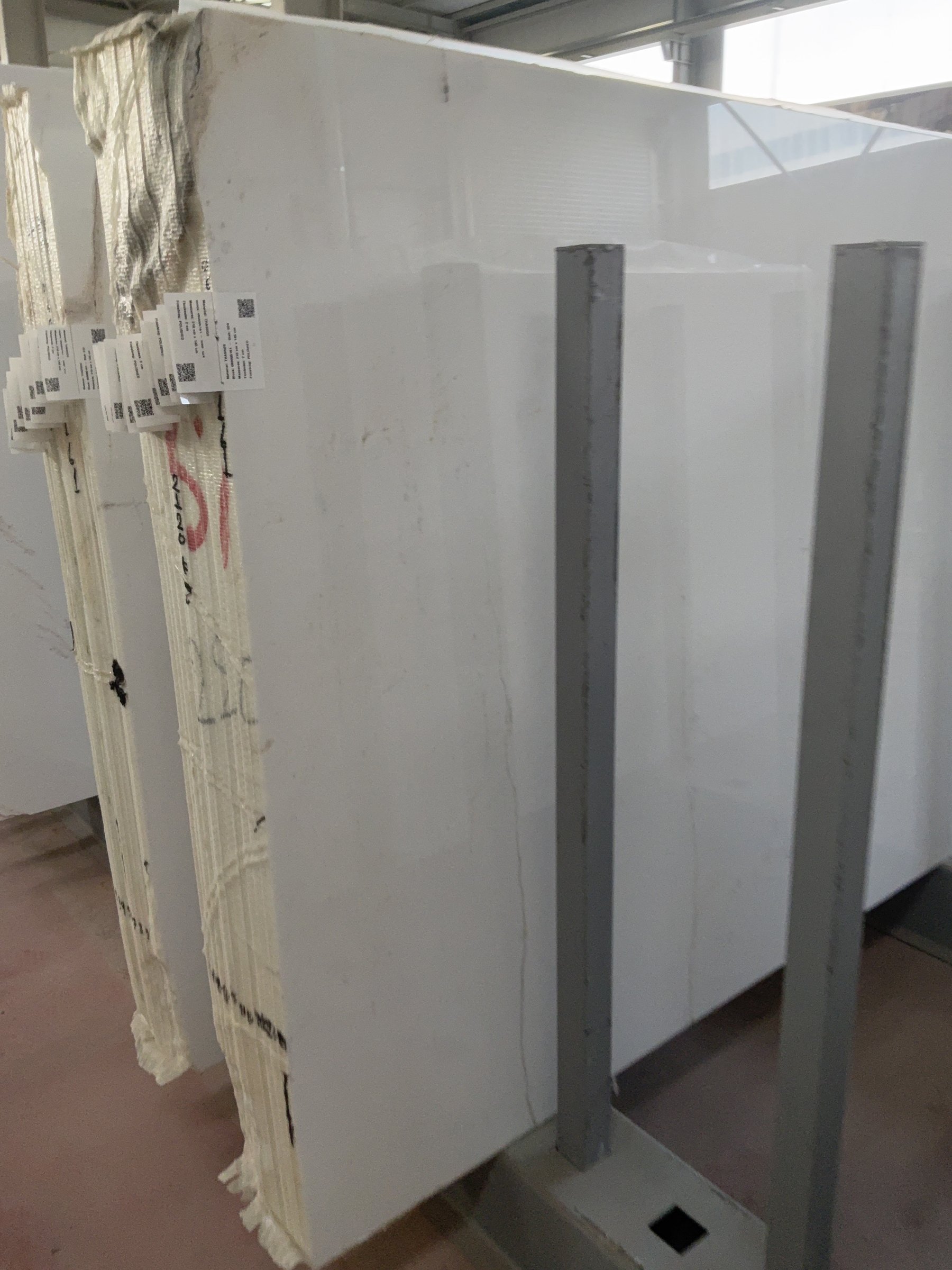
Gross vs net dimensions
Slabs rarely have perfectly straight edges straight from the saw. Some tags list a gross size (the full rectangle including rough edges) and a net or usable size. When you calculate quantities, use the net figure, and allow for cutting waste around sinks, openings and joints. If only one size is shown, ask your supplier which it is.
Using tags to match and order slabs
- Photograph each slab with its tag visible during selection, so you can refer back to exact pieces.
- Reserve consecutive numbers from one block for areas that must look uniform.
- Check the packing list against tags on arrival, confirming block, slab numbers and crate numbers.
- Keep a few spare slabs from the same block for future repairs if your budget allows.
- Tell your fabricator the sequence so that layouts and book-matched pairs are cut in the correct order.
Tags, packing lists and customs paperwork
For imported stone, slab tags tie into the shipping documents. The packing list typically lists crates, slab counts and areas, and that information supports both receiving checks and customs documentation. Document requirements change from time to time, so it is wise to work with an experienced clearing agent; our customs clearance team can explain the current process in general terms. For movement from port to site, see our marble transport service.
Common mistakes when reading slab labels
- Assuming all tags use the same format: one supplier’s code may list length first, another height first. Check the legend or ask.
- Mixing blocks without noticing: two crates of the same stone name can come from different blocks and look different side by side.
- Ignoring finish codes: a polished and a honed slab can look similar under warehouse lighting but very different once installed.
- Removing tags too early: keep labels on slabs until fabrication layouts are final, so pieces can still be traced.
A little care at this stage prevents expensive surprises later, when slabs have already been cut and installed.
We can help you choose matched slabs by block and sequence. View our marble slabs or contact us at info@prosvogue.com.
Frequently asked questions
What does 12/40 on a slab tag mean?
Usually it means the slab is number 12 of 40 cut from the same block. Exact formats vary by supplier, so confirm with them.
Why should I choose slabs from the same block?
Slabs from one block, especially consecutive ones, have the closest colour and veining, giving a more consistent finished surface.
Are tag dimensions the usable size?
Not always. Some tags show gross size including rough edges. Ask whether the figure is gross or net before calculating quantities.
Key topics: marble slab tag · slab label · block number · slab sequence · marble ordering · book-matching