Before comparing quotes, it helps to understand how installers size a home solar system. Sizing is not guesswork: it starts with your electricity use and works through panels, inverter and, if needed, batteries. This guide sets out the method step by step, so you can check that any proposal you receive makes sense. It deliberately avoids prices, which change frequently.
Step 1: Know your energy use before you size a home solar system
Start with your electricity bills. Each bill shows the units consumed, where one unit is one kilowatt-hour (kWh). Collect at least twelve months if you can, because use in Pakistan varies greatly between summer, with fans and air conditioners, and winter.
- Note the monthly units and find the average and the peak months.
- Divide the monthly figure by the number of days to get average daily use.
- Consider upcoming changes, such as new air conditioners, an electric vehicle or a home office.
If you are building a new house or want backup for selected loads, make a load list instead: write down each appliance, its power rating in watts and the hours it runs each day. Multiply watts by hours to get watt-hours, then add them up.
Step 2: Decide what the system must do
The purpose shapes the size. Ask yourself:
- Do you want to cover all of your daytime use, part of it or as much as the roof allows?
- Do you need backup during load-shedding? If so, which loads and for how many hours?
- Is the system meant to run independently, or alongside the grid?
A system for bill reduction is sized mainly on energy (kWh). A backup system must also be sized on power (kW) and on stored energy in batteries.
Step 3: Size the solar array
The array must produce your target daily energy. The basic method is:
- Find your peak sun hours. This is the equivalent number of hours per day of full-strength sunlight at your location. It varies by city and season, and installers use local solar data for it.
- Allow for losses. Heat, dust, wiring, inverter conversion and ageing all reduce output. Designers apply a loss or performance factor to account for them.
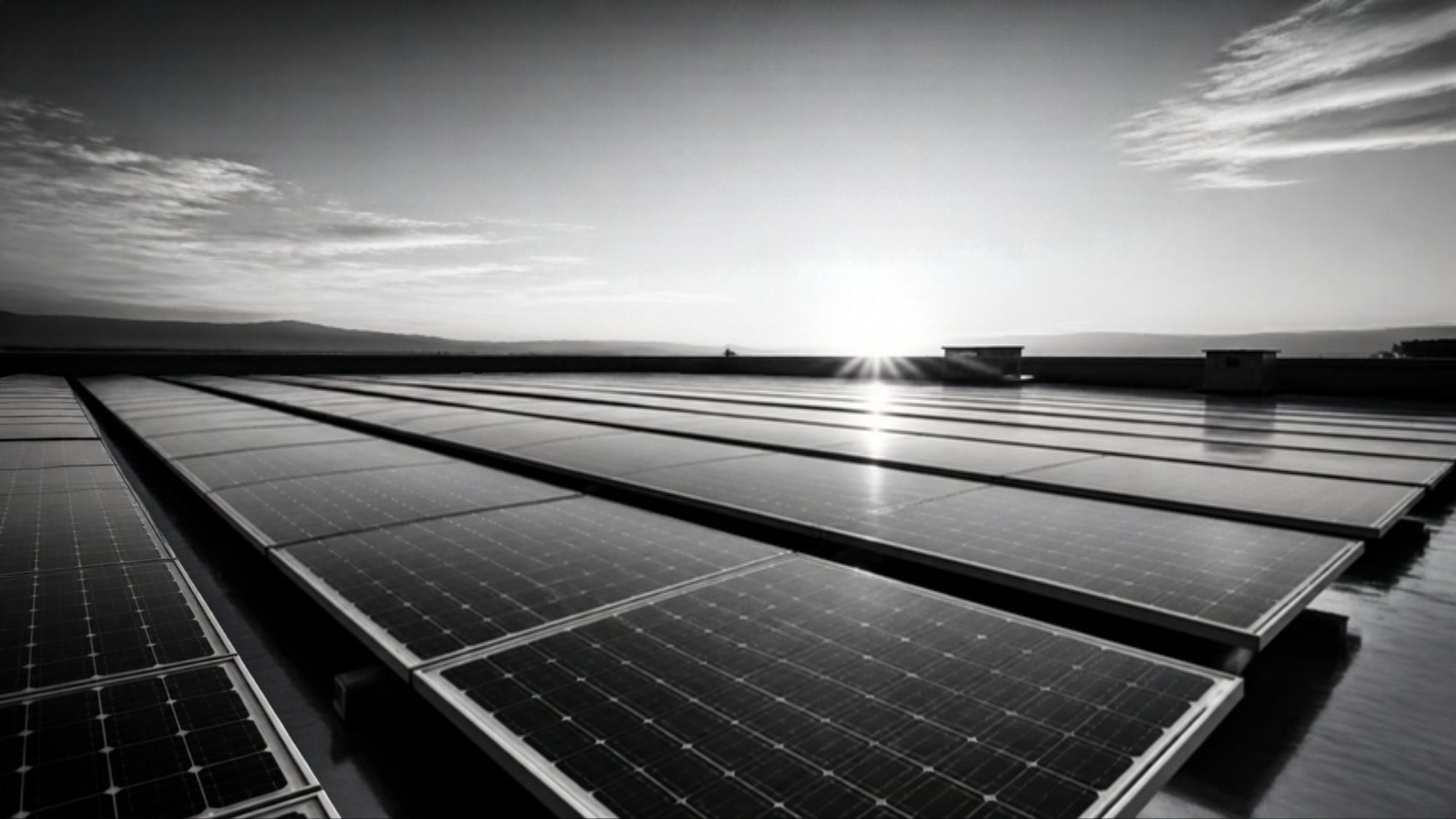
- Calculate array size. Array size in kW is roughly daily energy target divided by (peak sun hours × performance factor).
- Convert to panels. Divide the array size by the rated wattage of one panel to find the number of panels, then round up.
Then check whether your roof can actually fit that many panels with good orientation, safe walkways and no shading from water tanks, stairs or neighbouring buildings. Roof area often becomes the real limit.

Step 4: Size the inverter
The inverter must handle both the array and your loads.
- Array side: the inverter’s DC input and voltage window must match the panel strings in both hot and cool conditions.
- Load side: for hybrid and off-grid systems, the inverter’s continuous rating must cover the loads that may run together, with headroom for motor start-up surges from pumps, refrigerators and air conditioners.
- Phase: confirm whether your connection is single-phase or three-phase.
Step 5: Size the battery bank (if needed)
For backup, start with the energy your chosen loads need during an outage: total watts of backup loads multiplied by the hours of backup required. Then adjust for the battery’s usable depth of discharge and for inverter losses. Lithium batteries typically allow a larger share of their capacity to be used than lead-acid, which affects the size you need. Finally, confirm that the solar array can recharge the battery on a normal day while also covering daytime loads.
Our comparison of solar batteries explains chemistry choices in more detail.
Step 6: Check the whole design
- Does the design meet your target on an average day, and what happens in the worst months?
- Is there room to expand later?
- Are cable sizes, breakers, surge protection and earthing included?
- If you plan to connect to the grid, does the size fit your sanctioned load and current DISCO requirements?
Reducing waste first, for example with efficient inverter air conditioners and LED lighting, can shrink the system you need.
Prosvogue designs solar panel and hybrid solar systems based on real load data. Contact us or email info@prosvogue.com with your recent bills.
Frequently asked questions
What information should I give an installer?
Recent electricity bills, a list of loads you want backed up, roof photos and dimensions, and whether your connection is single- or three-phase.
Can I size a system just by the number of air conditioners?
Not reliably. Running hours, inverter technology and other loads all matter, so a proper load calculation is needed.
Should I oversize the array for the future?
A little headroom is sensible, but check roof space, inverter limits and any grid-connection rules first.
Key topics: size a home solar system · solar sizing · load calculation · peak sun hours · battery sizing · rooftop solar