This natural stone glossary is written for homeowners, architects and contractors who want to talk confidently with suppliers and fabricators. Stone has its own language, and a misunderstood word can mean the wrong finish, the wrong thickness or a mismatched wall. Here are the terms you are most likely to meet, grouped by stage.
Stone types and geology
- Marble: a metamorphic rock formed from limestone or dolostone under heat and pressure, made mainly of calcite or dolomite crystals.
- Calcitic marble: marble made mostly of calcite.
- Dolomitic marble: marble made mostly of dolomite, generally a little harder and less reactive to acid than calcitic marble.
- Granite: an igneous rock, harder than marble and generally more resistant to acids.
- Limestone: a sedimentary rock of calcium carbonate, typically softer and more porous than marble.
- Veining: lines of different minerals running through the stone.
- Porosity: how much open space the stone contains, which affects absorption.
From quarry to slab
- Quarry: the site where stone is extracted.
- Block: a large, roughly rectangular piece cut from the quarry face. See our marble blocks page.
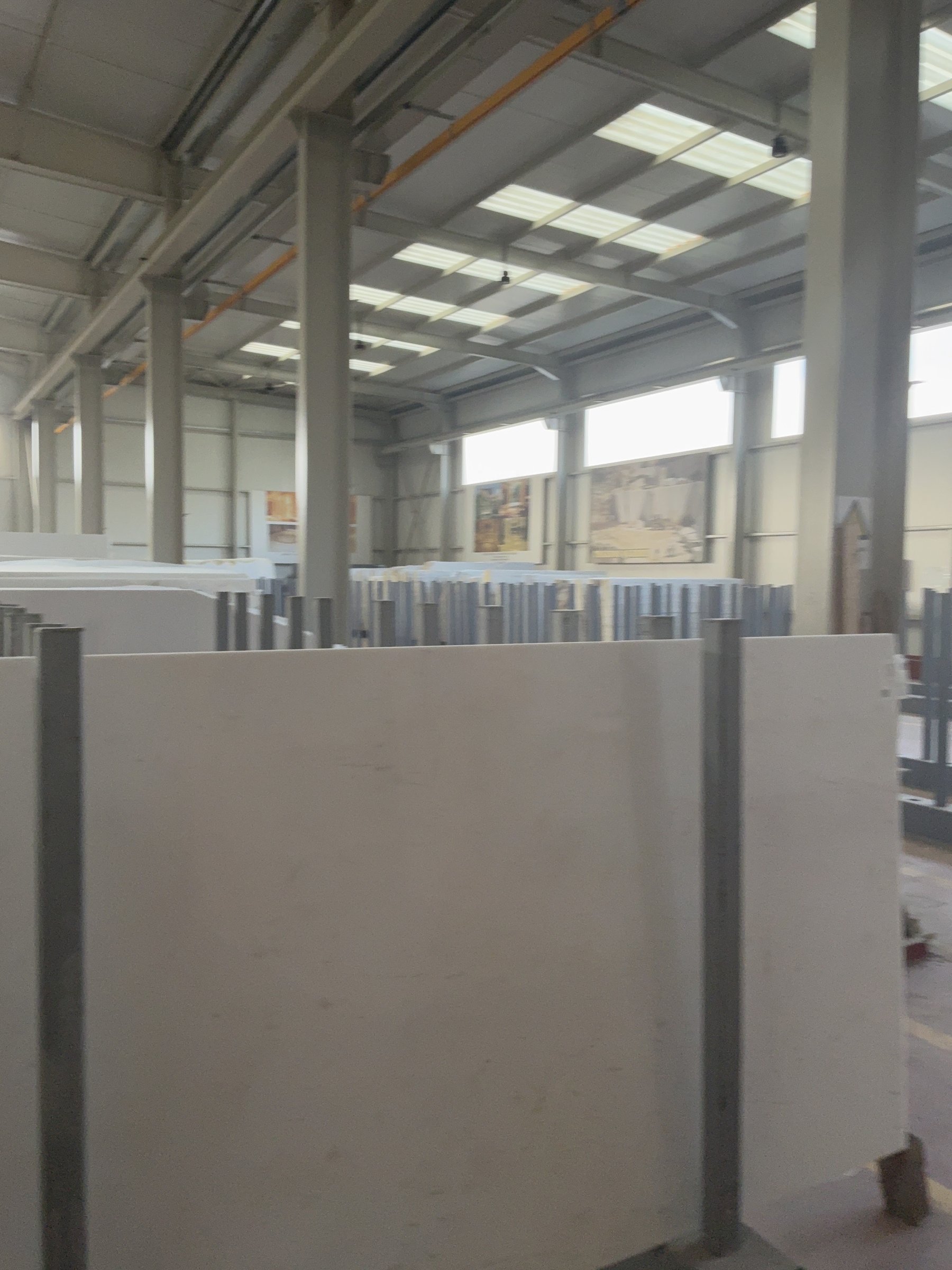
- Gangsaw: a machine with multiple blades that cuts a block into slabs.
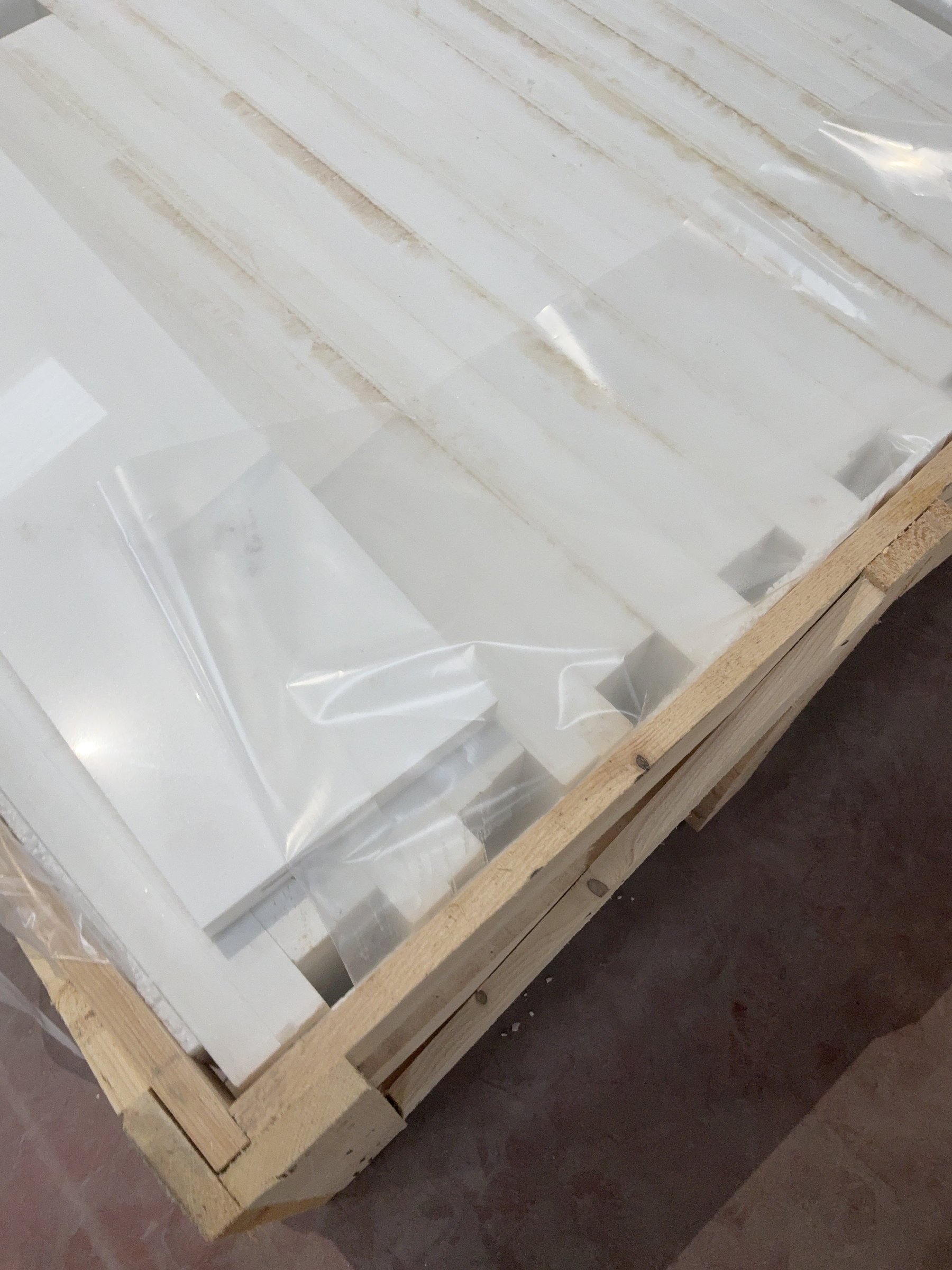
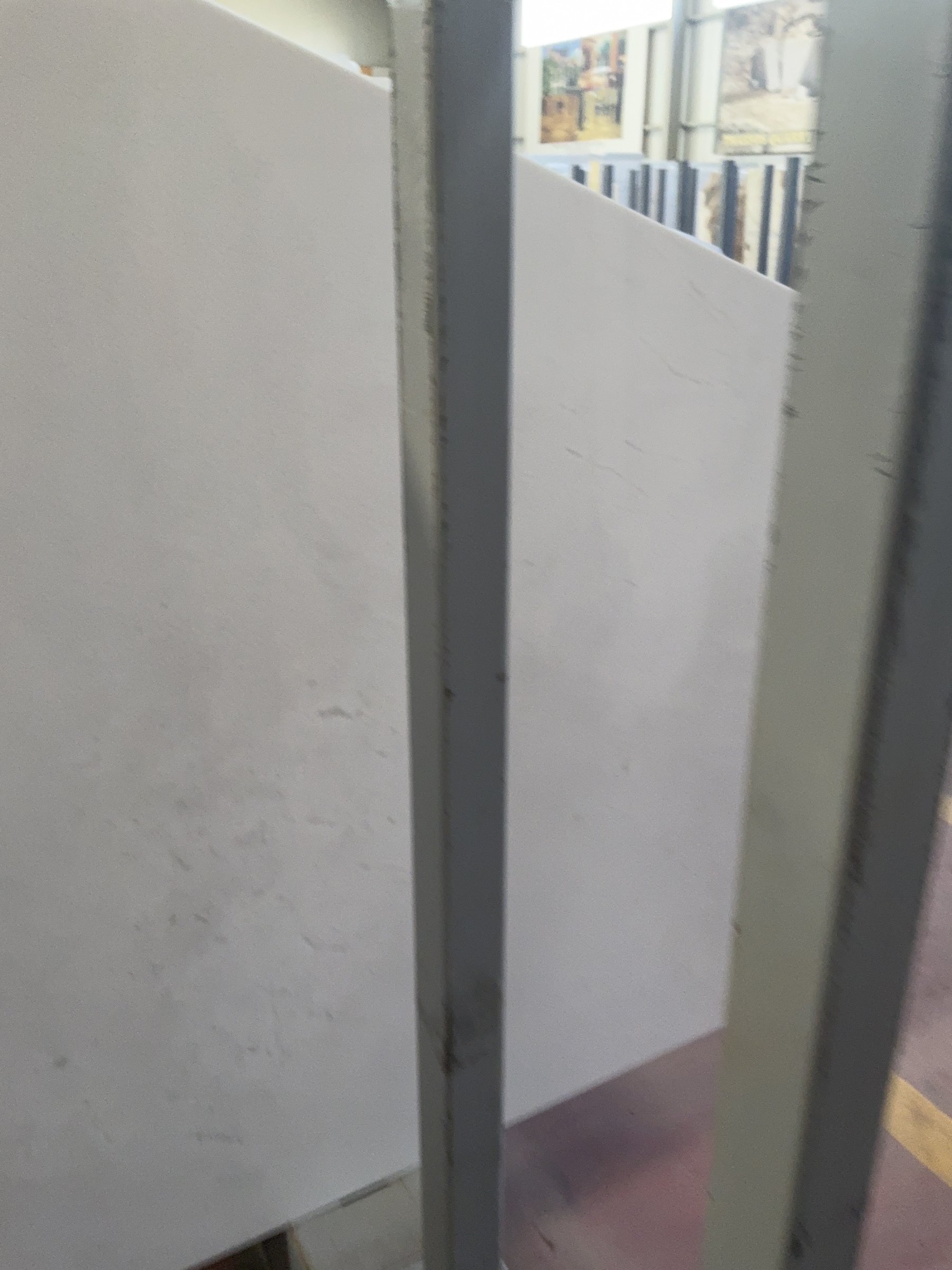
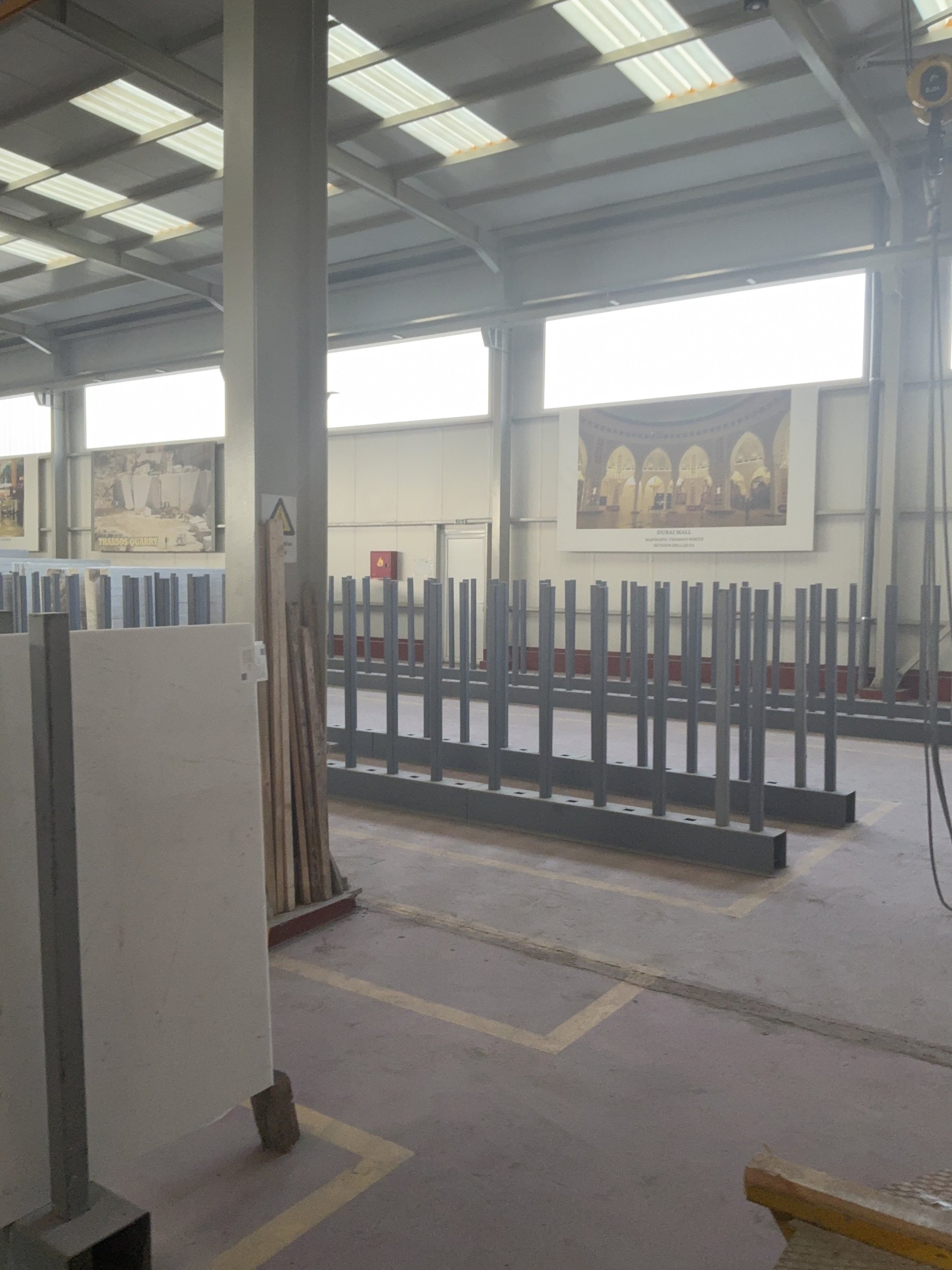
- Slab: a large sheet sawn from a block, typically 2 cm or 3 cm thick. See marble slabs.
- Sequence or slab number: the order in which slabs were cut from a block.
- Bundle: a set of consecutive slabs sold or shipped together.
- Resin and mesh: filling of natural pits and a fibreglass backing used to strengthen some slabs.
- Cut-to-size: stone cut to exact project dimensions before delivery.
Finishes in the natural stone glossary
- Polished: high-gloss, reflective surface.
- Honed: smooth, matte or satin surface without gloss.
- Brushed: softly textured surface created with abrasive brushes.
- Flamed: rough surface produced by intense heat, mainly used on granite.
- Sandblasted and bush-hammered: textured surfaces for grip or a rustic look.
- Edge profiles: shapes such as eased, bevelled, bullnose and ogee.
Design and fabrication terms
- Book-matching: placing consecutive slabs side by side like the pages of an open book, so veins mirror each other.
- Slip-matching: placing consecutive slabs in sequence without flipping, so the pattern repeats.
- Vein-cut and cross-cut: cutting a block parallel or perpendicular to its bedding, giving linear or cloudy patterns.
- Templating: making exact patterns of counters or walls before cutting.
- Mitred edge: two pieces cut at an angle and joined to look like a thicker block.
- Carving and mouldings: shaped profiles such as cornices and trims; see marble carving.
Installation and care terms
- Lippage: height difference between adjacent tiles or slabs.
- Substrate: the surface stone is fixed to.
- Mechanical fixing: anchors and brackets that hold cladding panels, common on exterior facades.
- Sealer: a product that reduces absorption to help prevent stains.
- Etching: dulling caused by acids reacting with calcium-based stone.
- Poultice: an absorbent paste used to draw stains out.
- Patina: the soft character stone develops with age and use.
Logistics terms for imported stone
- Crate: a timber frame that holds slabs upright for shipping.
- Packing list: the document listing crates, slab counts, sizes and areas.
- Bill of lading: the shipping document issued by the carrier for sea freight.
- Container: standard steel box used for sea freight; stone is heavy, so weight limits often matter more than volume.
- Customs clearance: the process of declaring and releasing goods at the port. Rules change, so check current requirements or speak to a licensed clearing agent.
Ask us anything about marble selection, fabrication or delivery. Visit marble and stone or contact us at info@prosvogue.com.
Frequently asked questions
What is the difference between a slab and a tile?
A slab is a large sheet cut directly from a block, while tiles are smaller, standard-sized pieces cut from slabs.
What does book-matched mean?
Two or more consecutive slabs are opened like a book so their veining mirrors across the joint.
Is dolomitic marble better than calcitic marble?
Neither is simply better. Dolomitic marble is usually a little harder and less acid-reactive, which some buyers prefer for busy areas.
Key topics: natural stone glossary · stone terms · marble buying · slab terminology · stone finishes · fabrication