Falls from height are among the most serious risks on any building site, and scaffolds are where many crews spend their working day. Getting the scaffolding safety basics right protects workers, keeps the job moving and avoids costly stoppages. This guide covers what a safe scaffold looks like and how to keep it that way.
Start with the right scaffold for the job
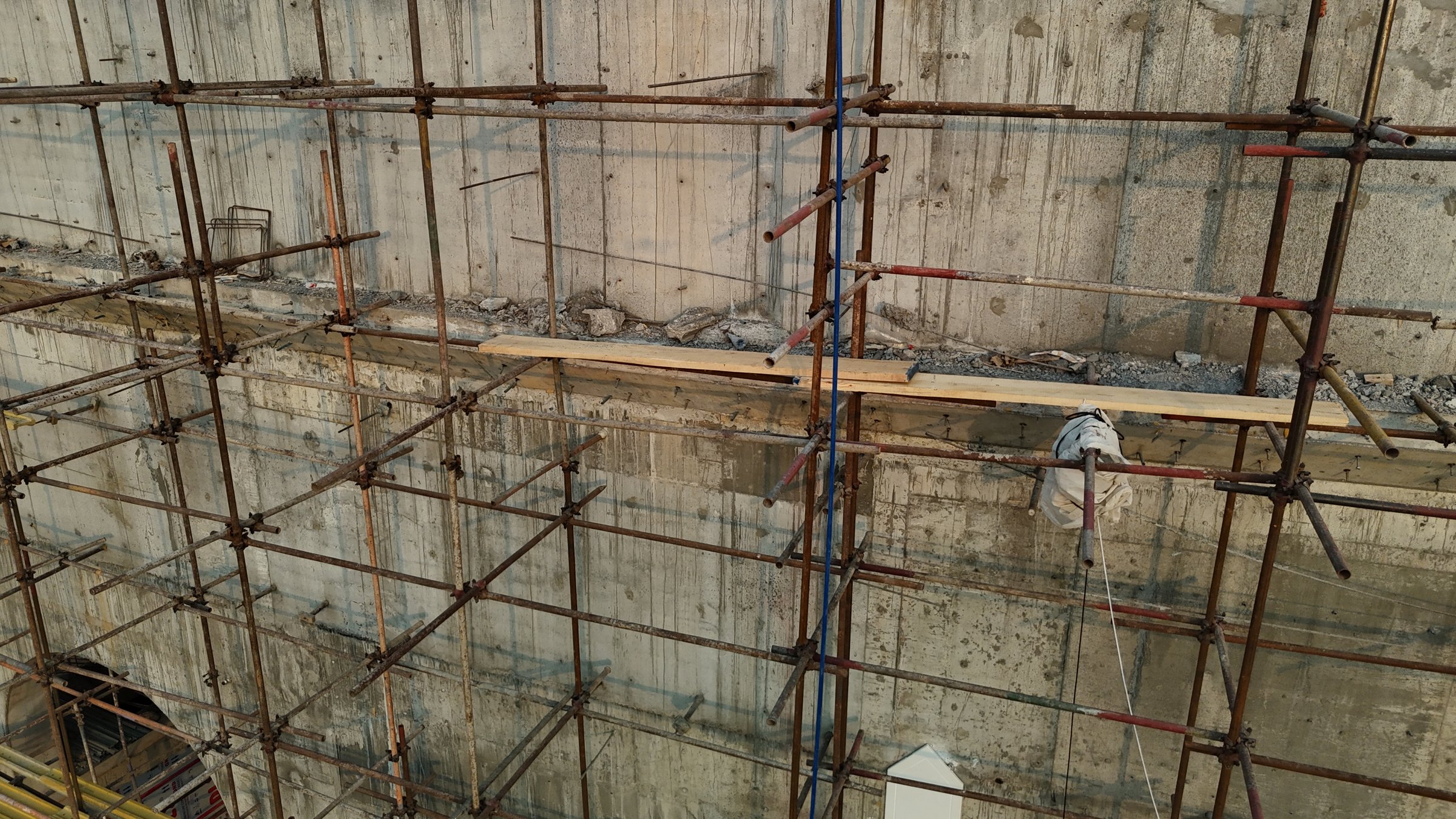
Scaffolds on Pakistani sites range from steel tube-and-coupler and system scaffolds to traditional bamboo and timber arrangements on smaller buildings. Whatever the material, the scaffold should suit the height, load and type of work. Masonry work with stacked blocks, plastering, stone cladding and painting place very different loads on platforms.
Larger or taller scaffolds should be designed by a competent person, and erected, altered and dismantled only by trained scaffolders. Labourers should not add or remove parts on their own initiative.
Foundations, bracing and ties
- Base plates and sole boards: standards should never rest directly on loose soil, bricks or broken blocks. Use base plates on sound timber sole boards.
- Level ground: soft or sloping ground must be prepared or compacted first, and checked after heavy rain.
- Bracing: diagonal and ledger bracing keeps the scaffold rigid and stops it swaying.
- Ties: the scaffold should be tied into the building at regular intervals. Ties must not be removed for convenience, for example to fit windows, without an approved alternative.
Platforms, guardrails and access
The working platform is where most accidents happen. Check that:
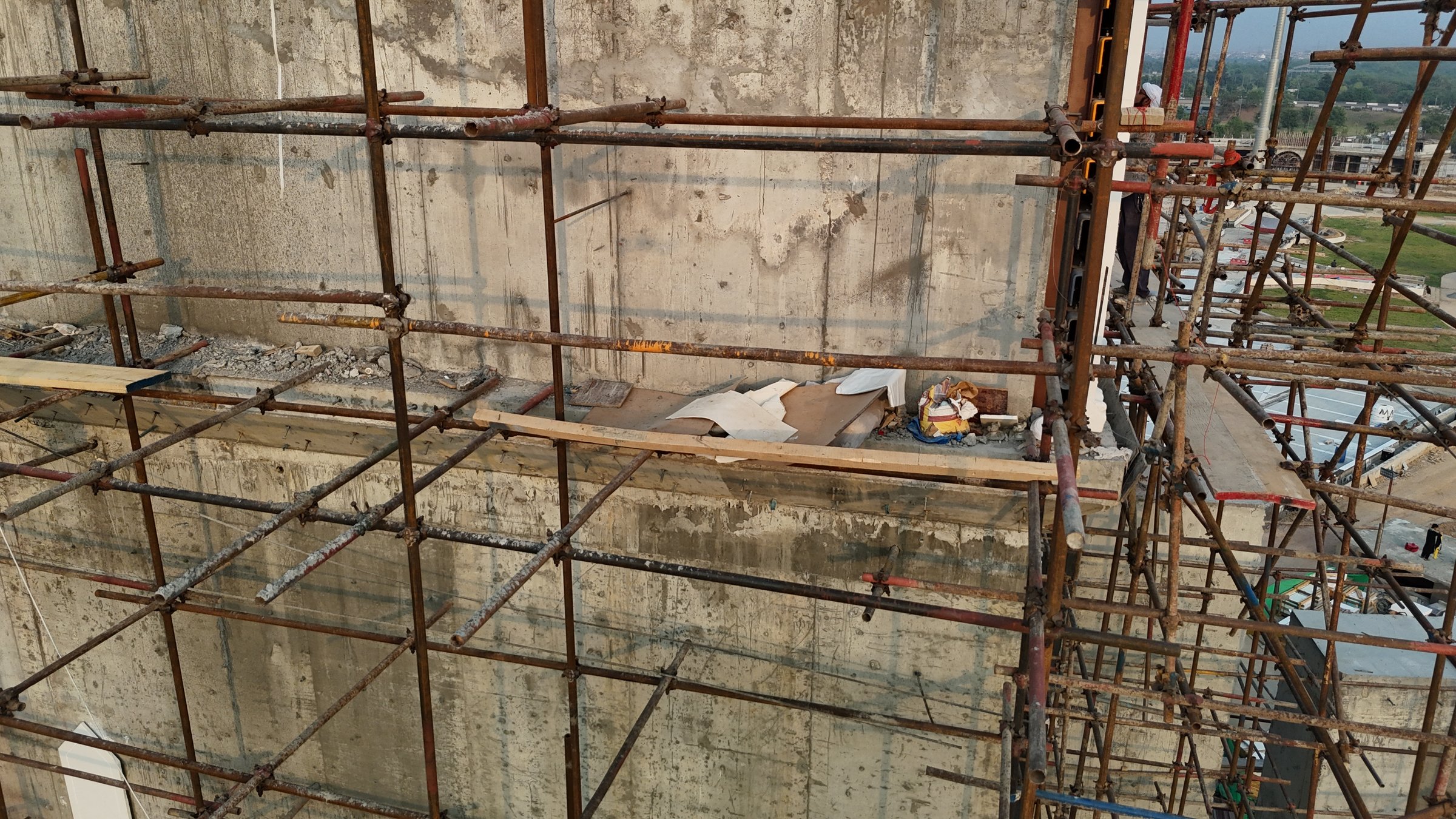
- Platforms are fully boarded with no gaps, loose planks or overhanging ends that can tip.
- Guardrails and mid-rails are fitted on open sides, with toe boards to stop materials falling.
- Safe access is provided by fixed ladders or stair towers, not by climbing the frame.
- Materials are stacked evenly and kept within the platform’s safe working load.
- Debris and offcuts are cleared regularly to prevent trips.
Where full edge protection is not possible, such as during erection, scaffolders should use suitable fall arrest equipment attached to secure anchor points.
Scaffolding safety basics for daily inspection
A scaffold that was safe on Monday may not be safe on Thursday. Inspections should happen before first use, at regular intervals during the job, and after anything that could affect stability, such as strong winds, heavy rain, an impact from a vehicle or an alteration.
A simple checklist for the site supervisor:
- Are base plates, sole boards and ground still sound?
- Are all ties, braces and couplers in place and tight?
- Are platforms fully boarded and guardrails complete?
- Is the scaffold overloaded or carrying materials it was not designed for?
- Is there safe clearance from overhead power lines?
- Is a tag or notice showing the last inspection date and status?
Any defect should be reported immediately and the scaffold marked as not for use until it is put right.
Weather, loading and working practices
Pakistan’s climate brings particular risks. Dust storms and strong pre-monsoon winds can catch sheeting and netting like a sail, so scaffolds wrapped in cloth or netting need extra ties. Monsoon rain softens ground beneath base plates and makes boards slippery. In peak summer, metal tubes get very hot and heat stress reduces concentration, so plan heavy tasks for cooler hours and provide water and shade.
Avoid throwing materials from height, use hoists or chutes, and keep a barricaded exclusion zone at ground level. Safety rules and requirements vary by project and client, so confirm the standards that apply with your safety officer or a qualified professional.
Prosvogue plans site safety into every building construction project. Learn more about our construction and engineering work, or contact us at info@prosvogue.com.
Frequently asked questions
Who is allowed to alter a scaffold?
Only trained scaffolders under a competent supervisor. Other workers should report problems rather than move boards, ties or braces themselves.
How often should scaffolds be inspected?
Before first use, at regular intervals set by the project’s safety plan, and after bad weather, impacts or any alteration.
Is bamboo scaffolding safe?
Bamboo scaffolding is still used in parts of South Asia. Its safety depends on good material, skilled erection, proper lashing, bracing and ties, and regular inspection, just like steel systems.
Key topics: scaffolding safety basics · scaffold inspection · fall prevention · guardrails · site safety · working at height