Natural stone is heavy, brittle at the edges and expensive to replace, so the way it is packed decides whether it arrives ready to install or ready for the skip. Good practice in packing natural stone is not complicated, but every step matters: the right crate, the right bracing, the right paperwork and a careful unload at the other end. This guide explains what a sound export crate looks like and what Pakistani buyers should ask their supplier before the stone leaves the quarry or factory.
Why stone needs specialist packing
Marble, granite and limestone are strong under compression but weak in bending. A slab lying flat on an uneven surface can crack under its own weight, and polished edges chip easily if they touch steel or another slab. During a long journey the load is lifted by forklifts and cranes, shaken on trucks and rolled at sea, so packaging has to absorb movement as well as weight.
Poor packing usually shows up as:
- cracked or snapped slabs, often near the corners or along natural veins;
- chipped arrises (edges) on polished or honed faces;
- scratches and rub marks where slabs were not separated;
- staining from wet timber, rusty strapping or unsuitable plastic film.
Crate types for slabs, tiles and blocks
The packing method depends on the product. Most exporters use a small number of standard formats.
Slab bundles and A-frames
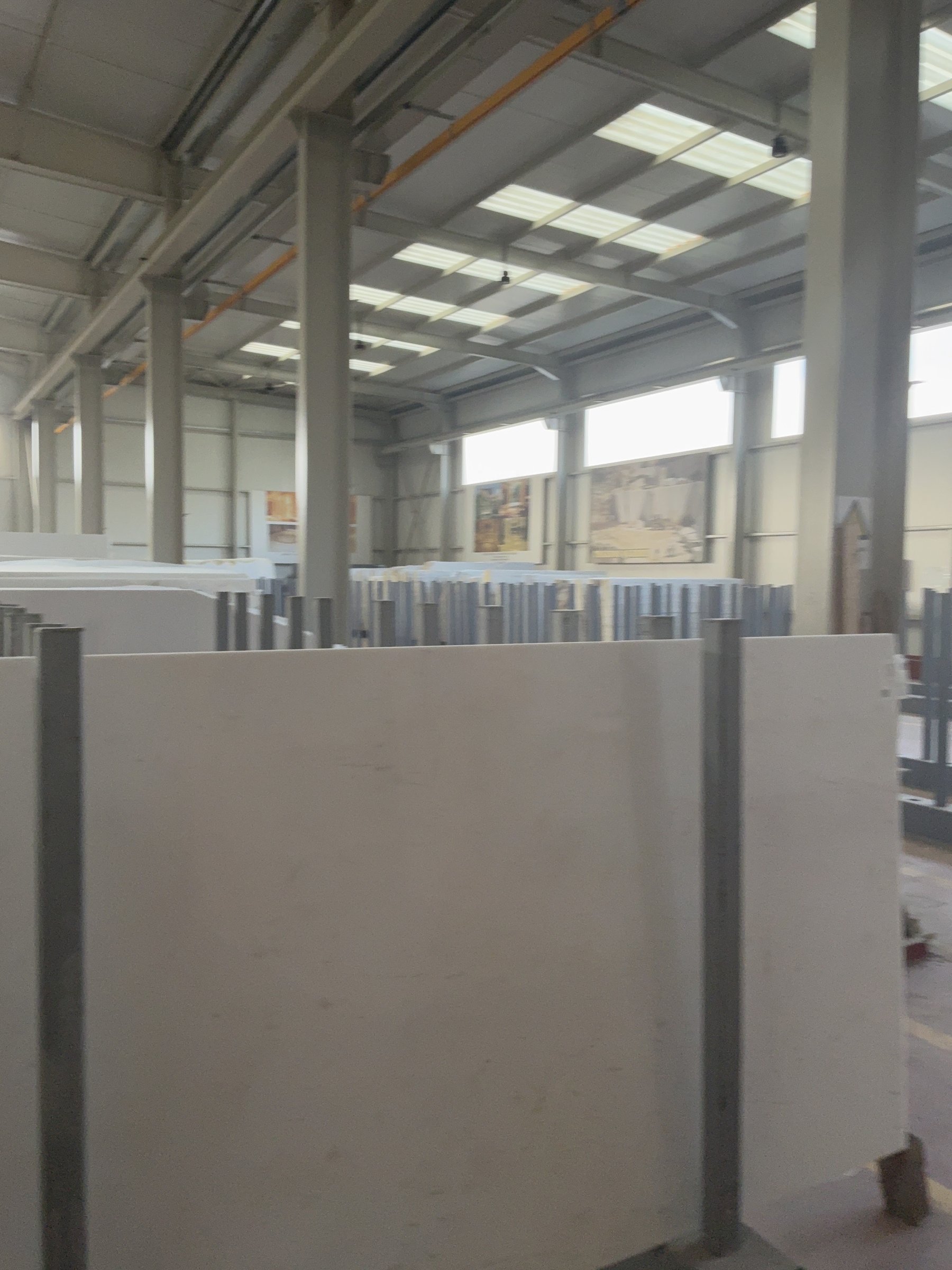
Large polished slabs are normally stood on edge, leaning slightly against a central timber or steel frame, and strapped together as a bundle. Standing slabs upright keeps the load on the strongest axis and makes lifting easier.
Closed crates for tiles and cut-to-size work
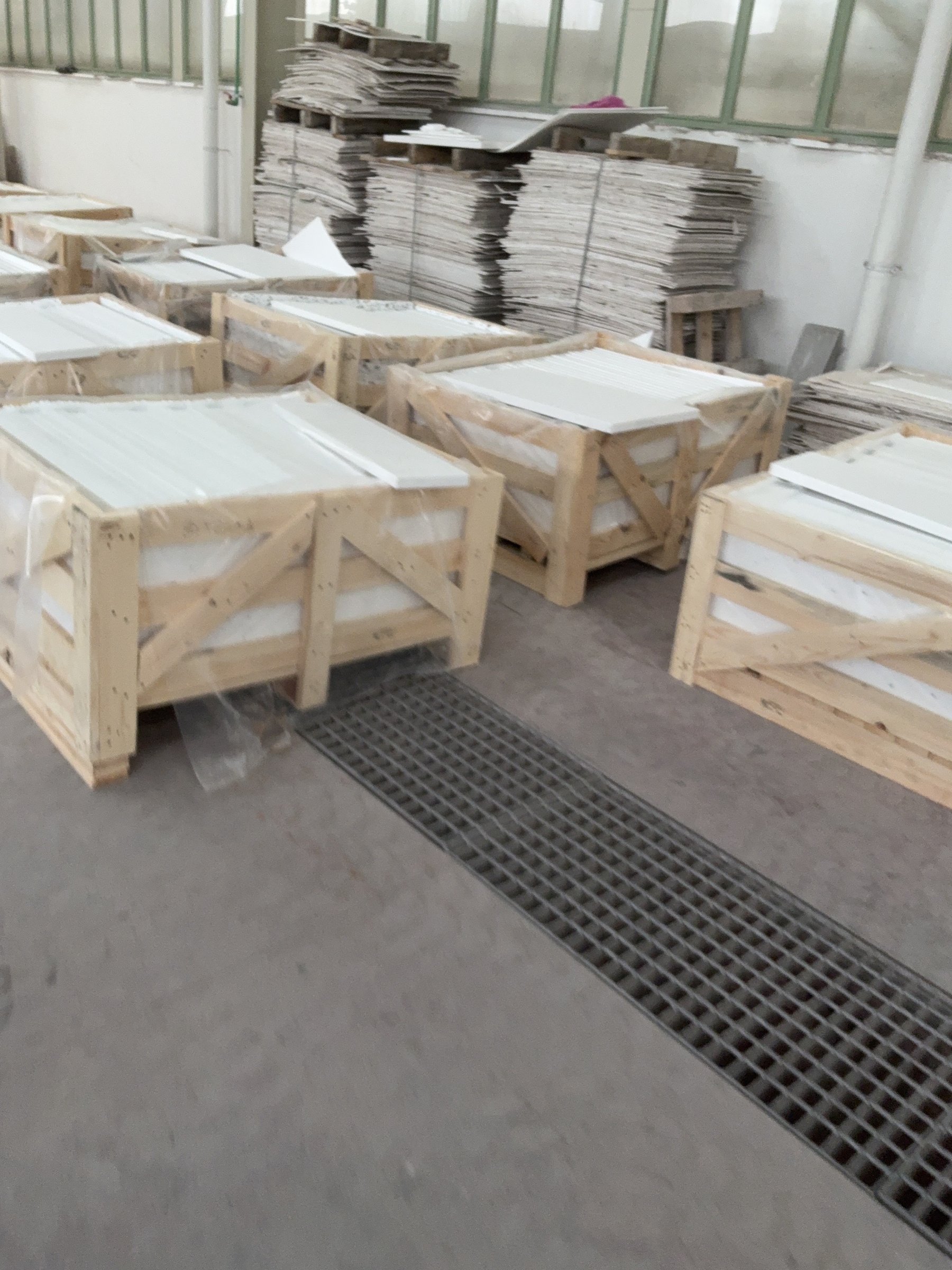
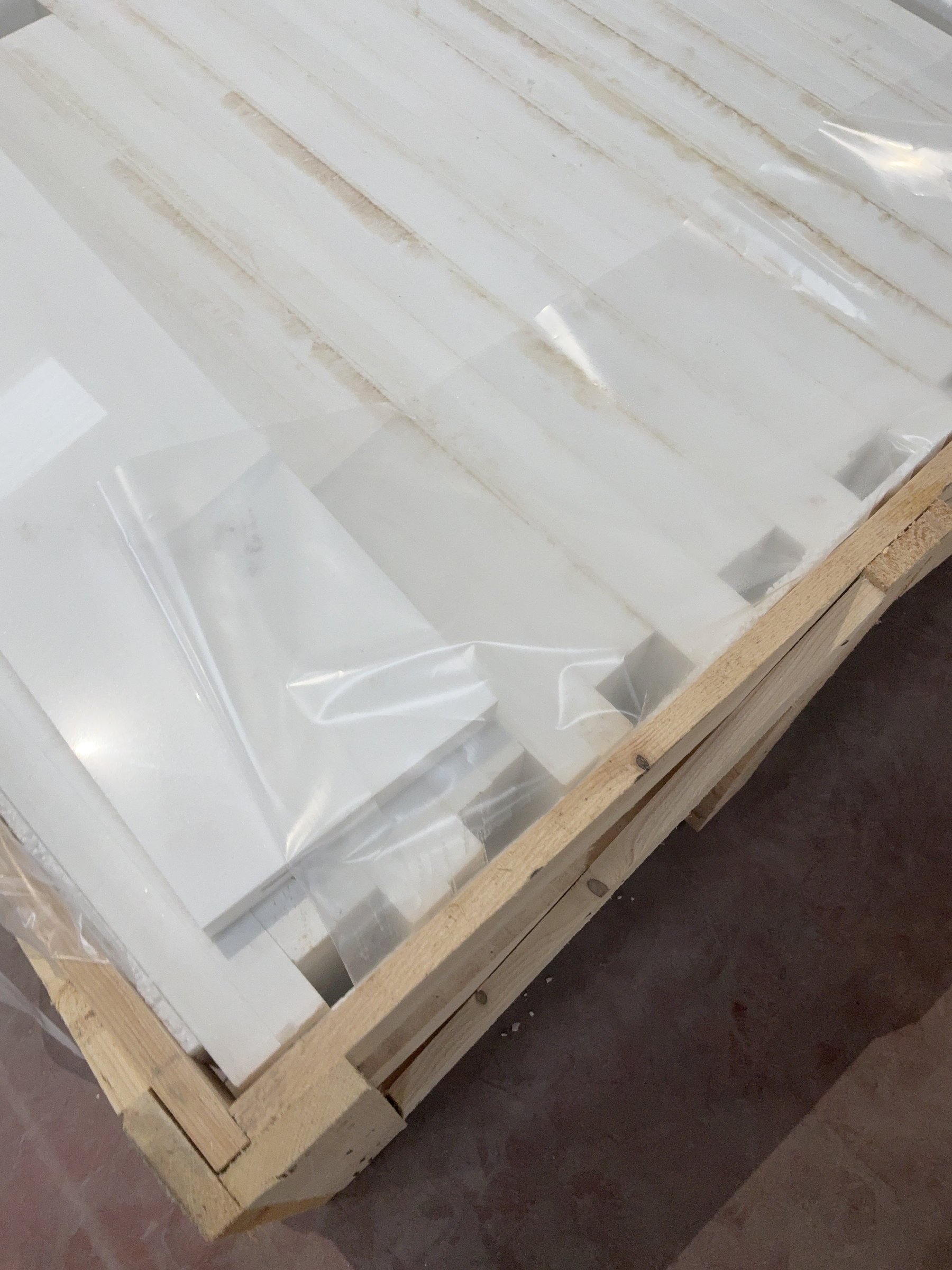
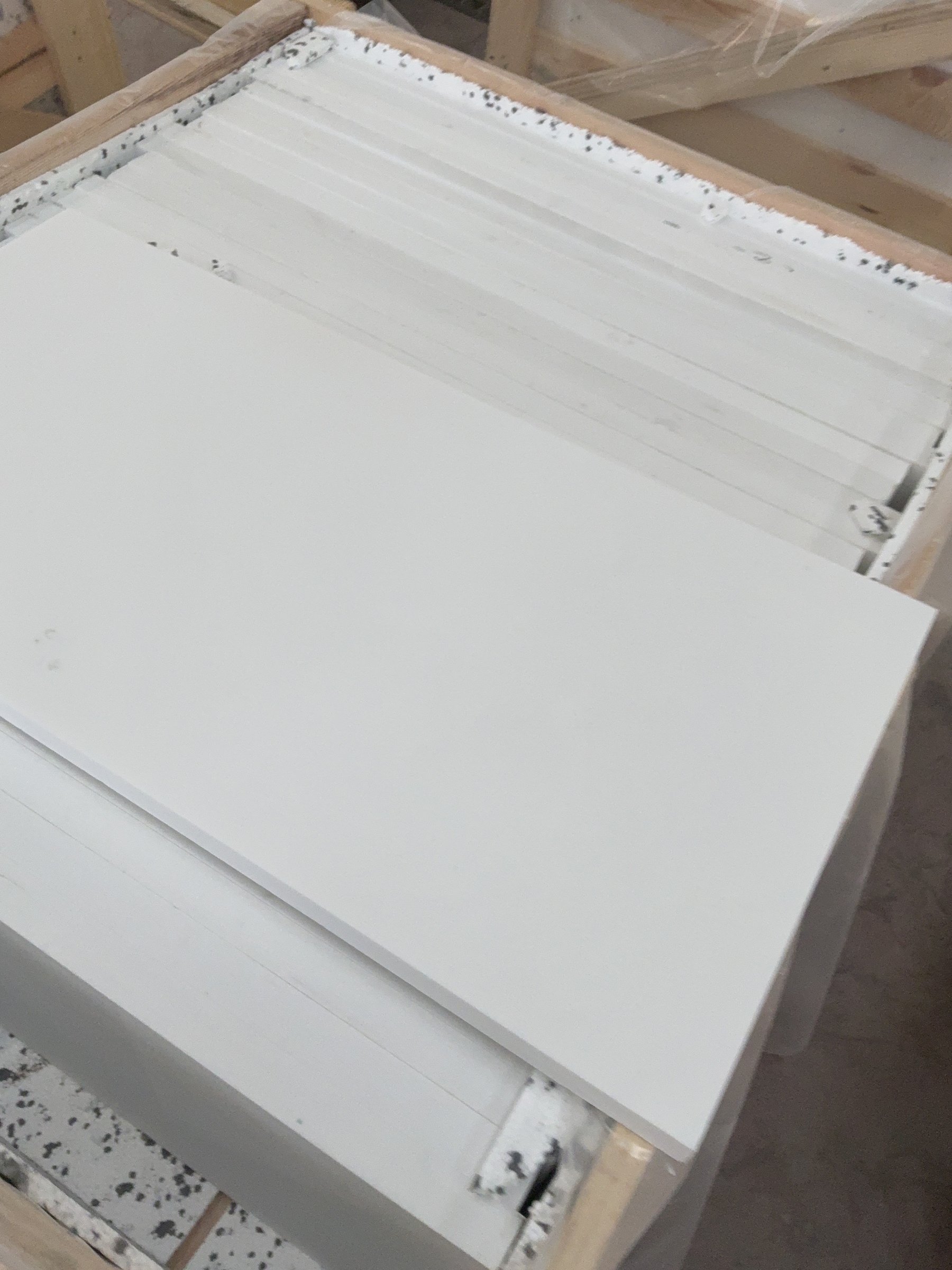
Tiles, steps, sills and cut-to-size marble pieces go into closed wooden crates. Pieces are stood on edge or stacked with separators, the gaps are filled so nothing can slide, and the lid is fixed down. Each crate should carry a clear label with its contents.
Blocks
Raw marble blocks are generally shipped unpacked and secured with timber chocks and lashings, because a block is solid and far less fragile than a finished slab.
Best practice in packing natural stone
Whatever the format, a well-packed consignment tends to share the same features:
- Sound, dry timber. Wood packaging for international trade is normally heat-treated or fumigated and stamped under the ISPM 15 standard. Wet timber can stain light marble such as Thassos White.
- Separation between faces. Polished faces should not touch. Foam strips, cardboard or clean plastic film between slabs prevents scratching.
- Edge protection. Corner protectors stop straps cutting into edges and protect arrises when bundles are moved.
- Tight bracing. Any movement inside a crate turns into impact. Gaps should be packed out with timber or dense filler.
- Correct strapping. Strapping should be tensioned evenly; steel straps need protection where they meet stone.
- Lifting points. Crates should have a base that forklift tines can enter safely, and weights should be marked.
Labelling and documentation on each crate
Ask your supplier to label every crate or bundle with:
- a crate or bundle number that matches the packing list;
- material name and finish, for example polished or honed;
- dimensions and quantity of pieces or square metres;
- gross weight;
- block number for slabs, so matching pieces can be kept together.
The packing list should mirror these labels exactly. When the crate numbers, weights and descriptions agree across the packing list, commercial invoice and physical cargo, customs examination is usually far more straightforward. Our customs clearance team sees this repeatedly.
Loading the container
Stone is dense, so a container usually reaches its weight limit long before it is full. That means the load has to be spread sensibly across the floor, not piled at one end. Common practice includes:
- placing heavy crates over the container’s floor cross-members and keeping weight centred;
- bracing crates against each other and the container walls with timber so nothing can slide;
- lashing bundles to the container’s lashing points;
- photographing the loaded container before the doors are sealed.
Unloading and inspection on arrival in Pakistan
Many breakages happen in the last few kilometres, not at sea. Plan the unload before the truck arrives: the right forklift or crane, a level hardstanding area and people who know how to handle slabs. Then:
- check seals and the outside of the container before opening;
- photograph each crate as it comes out;
- open a sample of crates and check pieces against the packing list;
- record any damage in writing at once, because insurers and suppliers usually need prompt notice;
- store slabs upright on timber, under cover, away from standing water.
For moves from the port or yard to site, our marble transport service uses vehicles and handling gear suited to heavy stone.
Prosvogue coordinates marble slab supply, freight and delivery across Pakistan. Contact us or email info@prosvogue.com to discuss your consignment.
Frequently asked questions
Should marble slabs be shipped flat or upright?
Large slabs are normally shipped upright on edge in bundles or A-frames. Lying a slab flat on an uneven surface increases the risk of cracking, so flat packing is generally kept for smaller, thicker pieces in closed crates.
Does the timber in stone crates need treatment?
In most international trade, wood packaging is expected to be heat-treated or fumigated and marked under ISPM 15. Requirements can change, so confirm the current rules with your supplier and clearing agent before shipping.
What should I do if crates arrive damaged?
Photograph everything before moving it further, note the damage on the delivery documents, and inform your supplier, freight forwarder and insurer promptly. Keep the damaged pieces until the claim is settled.
Key topics: packing natural stone · stone crates · marble export · slab packing · fumigated timber · container loading