Good lighting is planned, not simply installed. Understanding lighting design basics, especially lumens, lux and colour temperature, helps you choose fittings that make a room comfortable, a workplace productive and a façade striking at night. This guide explains the key terms in plain language, with practical tips for homes, offices and buildings in Pakistan.
Lumens: how much light a source produces
A lumen (lm) measures the total visible light a lamp or fitting gives out. With LED lighting, watts no longer tell you how bright a lamp is, because efficient LEDs produce far more light per watt than old incandescent bulbs. Always compare lamps by lumens.
A related figure is efficacy, measured in lumens per watt. Higher efficacy means more light for the same electricity, which matters on solar and backup systems where every watt counts.
Lux: how much light reaches a surface
Lux measures illuminance: the amount of light falling on a surface, such as a desk, floor or wall. One lux equals one lumen spread over one square metre. The same lamp gives high lux on a desk directly below it and much lower lux in the far corner of the room.
Designers work to lux targets for each task. Corridors and stores need relatively low levels, general living areas need moderate levels, and detailed work such as reading, office tasks, kitchens and workshops needs more. Recognised lighting standards and guides publish recommended values for different spaces, and a lighting designer will use them along with the room’s size, ceiling height and surface colours. Light-coloured walls reflect more light than dark ones, so the same fittings perform differently in each room.
Colour temperature: warm or cool light
Colour temperature describes whether white light looks warm (yellowish) or cool (bluish). It is measured in kelvin (K).
- Warm white (around 2700K to 3000K): relaxed and welcoming; suits bedrooms, lounges, restaurants and hotel rooms.
- Neutral white (around 3500K to 4000K): balanced and clear; suits kitchens, offices, retail and classrooms.
- Cool white (around 5000K to 6500K): crisp and bright; often used in workshops, warehouses, car parks and task areas.
Mixing colour temperatures in one space usually looks untidy. Choose one for each area, or use tunable fittings that let you adjust it during the day.
Colour rendering
The colour rendering index (CRI) shows how accurately a light source reveals colours compared with a reference source. Higher CRI makes skin tones, food, fabrics and natural stone look more true to life. For showrooms, kitchens and spaces with marble or wood finishes, a high-CRI source makes a visible difference.
Layering light: the core of lighting design basics
Most good schemes combine three layers:
- Ambient lighting: the general light that lets people move around safely, usually from ceiling fittings or panels.
- Task lighting: focused light where work happens, such as desks, counters and mirrors.
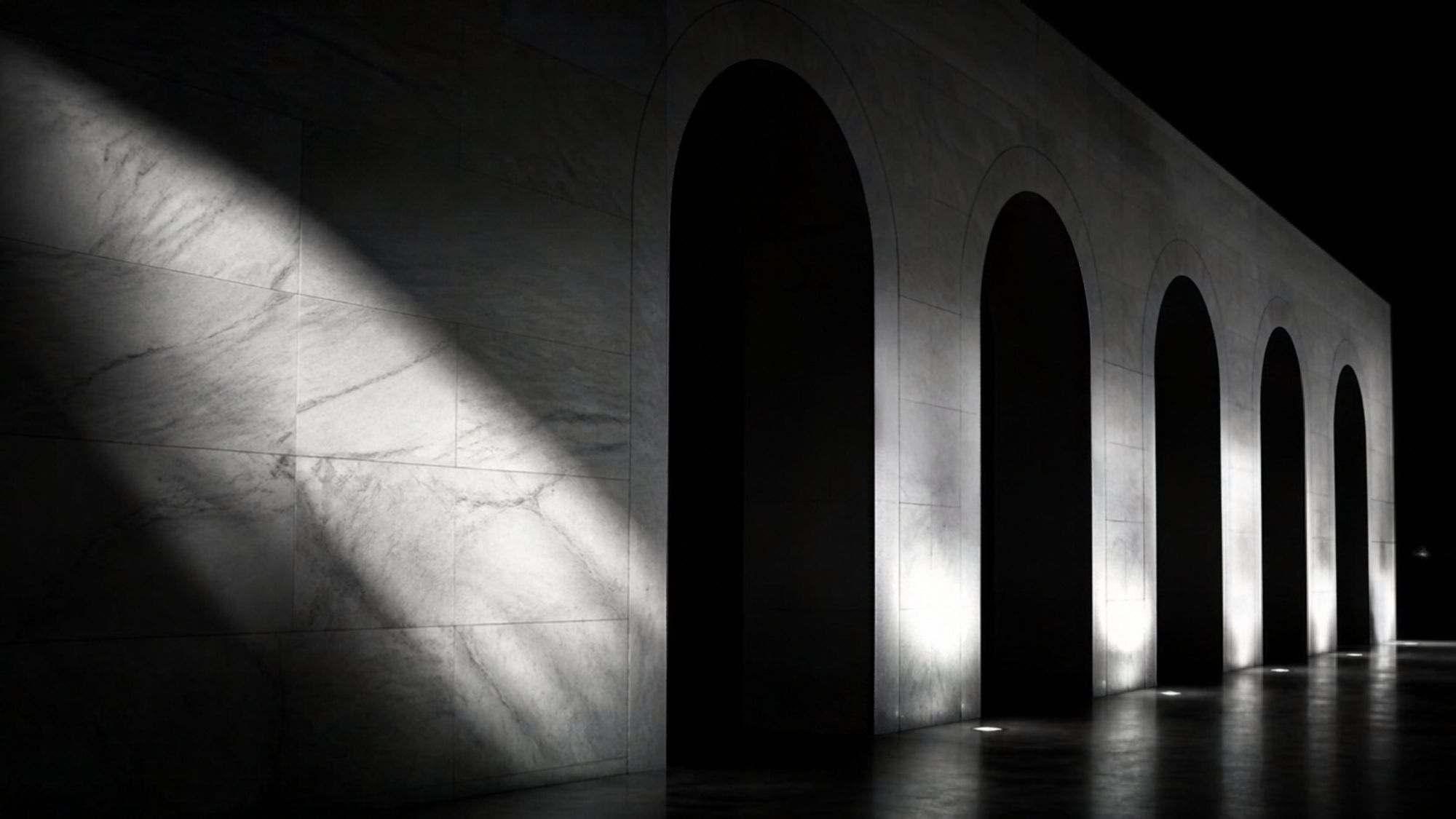
- Accent lighting: highlights features such as artwork, textured walls, stone cladding or architectural details.
Controls tie the layers together. Dimmers, scenes and sensors let one room work for different activities, and they reduce energy use. Our guide to smart lighting covers the options.
A real-world example: Yadgar-e-Fatah
Large architectural projects show these principles at scale. The Yadgar-e-Fatah monument in Islamabad, clad in Thassos White marble imported from Greece, uses 2,871 lighting fixtures and four 30,000-lumen projectors. White marble reflects light strongly, so a scheme like this has to balance brightness, glare and contrast to bring out carved detail rather than flatten it. You can read more about the project in our Yadgar-e-Fatah marble cladding article.
Practical tips
- Plan lighting at the design stage, before ceilings and wiring are finished.
- Compare lamps by lumens, efficacy, colour temperature and CRI, not watts.
- Avoid glare: shield bright sources from direct view, especially over desks and screens.
- Light vertical surfaces, as walls and features make spaces feel brighter.
- Choose outdoor fittings with a suitable IP rating for dust and rain.
Prosvogue delivers electrical works and smart lighting for homes, offices and landmark buildings. Contact us or email info@prosvogue.com.
Frequently asked questions
What is the difference between lumens and lux?
Lumens measure the light a source gives out. Lux measures how much of that light lands on a surface, per square metre.
Which colour temperature is best for an office?
Neutral white, around 3500K to 4000K, is a common choice because it feels clear without being harsh.
Why does a high-CRI light matter for marble?
High-CRI light shows the true tones and veining of natural stone, while low-CRI light can make it look flat or discoloured.
Key topics: lighting design basics · lumens · lux levels · colour temperature · CRI · architectural lighting